
How Data Brokers Collect and Sell Your Information
Most people meet data brokers the same unsettling way. They search their own name, and there it is: their age, past addresses, relatives, maybe a phone number, sitting on a site they have never heard of, ready for anyone to look up. It feels like a violation, and understandably so. But it is not magic, and it is not hopeless.
This guide explains, calmly, how data brokers collect and sell your personal information, where that information comes from, and why asking for removal is a reasonable response. Once you understand how your details got there, removal becomes a concrete, doable task rather than a vague worry. It is the starting point for the free steps we cover elsewhere.
What Is a Data Broker?
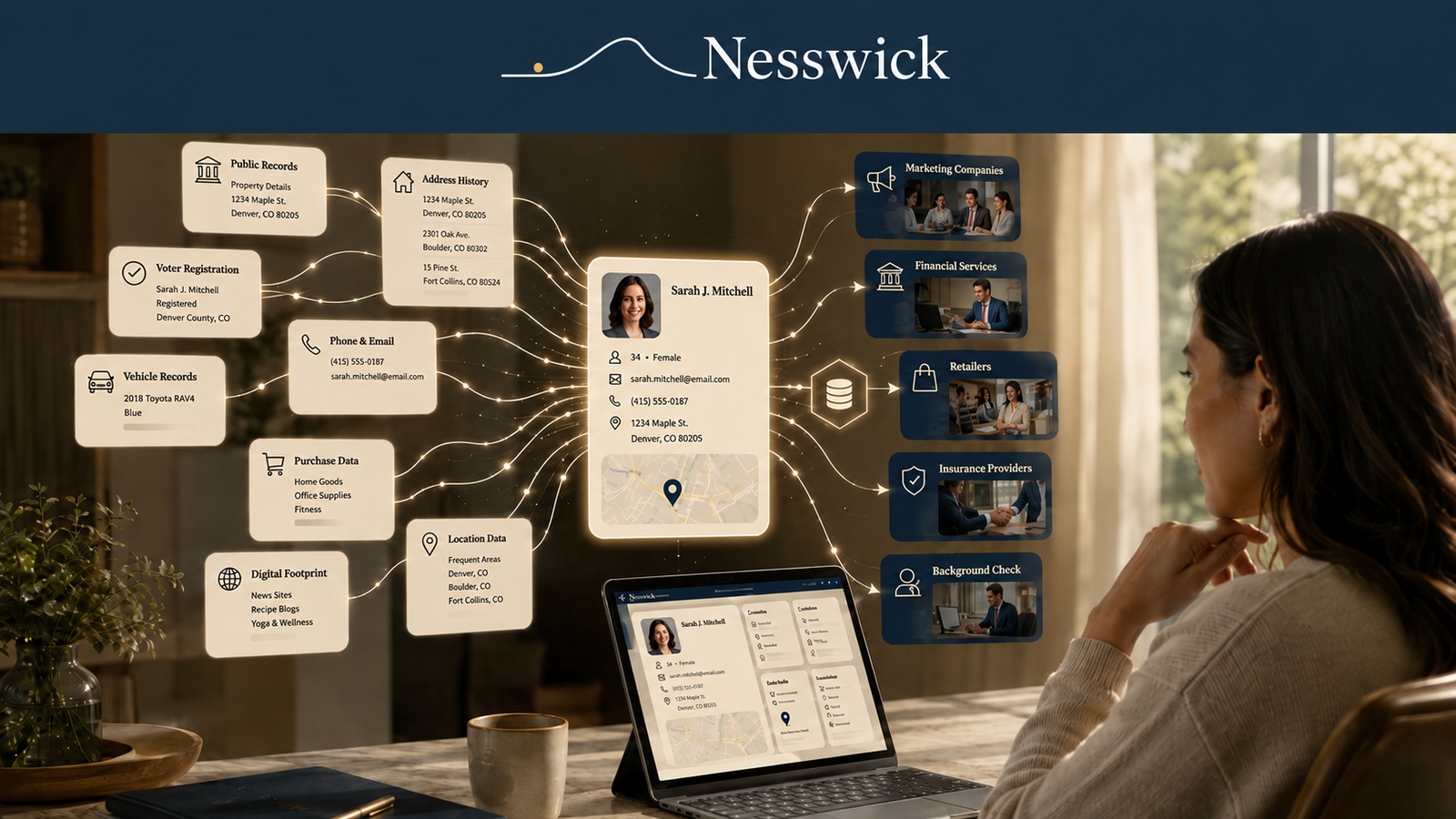
A data broker is a company that collects personal information about people, packages it, and sells or displays it, often without those people ever knowing. The Federal Trade Commission describes people-search sites as a type of data broker that collects personal information from a variety of sources, compiles it into a report, and sells those reports to anyone willing to pay.
People-search sites are the most visible kind: the ones that show your name, address history, and relatives when someone looks you up. A typical listing can include age and date of birth, current and former names, current and previous addresses, phone numbers and other contact information, marital status, property and voter registration records, professional licenses, and the names of family members. Behind these sites sits a larger, quieter industry of brokers that compile detailed profiles and sell them to marketers and other companies.
None of this requires you to have done anything wrong or careless. Data brokers build their business on information that is, in many cases, legally available. That is exactly why the industry exists at the scale it does, and why removal is an ongoing effort rather than a one-time fix.
Where Data Brokers Get Your Information
Your details reach data brokers through several ordinary channels, usually combined into a single profile.
Public records
Property records, voter registrations, court filings, licenses, and marriage or business records are often public by law, and brokers gather them at scale.
Commercial sources
Purchases, loyalty programs, warranty registrations, and subscriptions can all feed information into the ecosystem, depending on the privacy terms involved. Purchase histories and the email addresses attached to everyday accounts are part of the same data collection.
Online activity and public profiles
Apps, websites, and advertising trackers gather information about what you do online, and some of it is bought, sold, and merged with the rest. Publicly viewable social media profiles can be collected too.
Other data brokers
Brokers also buy from each other, so a single detail can spread across many sites. The result is a profile assembled from fragments you released in dozens of unrelated moments, none of which felt significant on its own.
How People-Search Sites Fit In
People-search sites are the part of this industry most families actually run into. They take the same underlying material, public records, commercial data, and information bought from other brokers, and present it as a readable report about one person.
That is why searching your own name can feel so exposing. The work of assembling scattered facts has already been done for whoever looks.
Why Removal Is a Legitimate Response
Because much of this data is gathered legally, people sometimes assume there is nothing they can do. That is not true. Most people-search sites offer some kind of opt-out process that lets you request removal of your listing, and you are entitled to use it. Removing yourself is a normal, reasonable act of privacy hygiene, not an attempt to hide anything.
Depending on where you live in the United States, you may have an additional route. California, for example, requires data brokers to register with the state and publishes that registry, which gives California residents a way to see who is holding this kind of information. Since August 1, 2026, registered brokers there must check the state’s accessible deletion mechanism at least once every 45 days and process deletion requests, subject to limited exceptions.
What a Data Broker Opt-Out Can and Cannot Do
An opt-out is worth doing, but it helps to be clear about its limits.
It generally stops a site from selling or sharing the information you asked it to remove, and from displaying it in that site’s own results. It does not delete anything from the underlying public records, and some categories of information cannot be opted out of at all. Your details may also still appear inside reports about your relatives, neighbors, or associates.
Removal is also not guaranteed to be permanent. Because brokers keep collecting from the same public and commercial sources, a listing can reappear, particularly if your public records change. That is not a reason to skip removal. It is a reason to treat it as ongoing maintenance, a point we explain fully in How Long Data Removal Takes and Why Information Comes Back.
What This Means for You
Understanding the machinery changes how you approach it. You are not chasing a single leak. You are reducing your presence across many sites that keep refilling.
The practical response is to work through the sites that list you, use their opt-out processes, and re-check periodically. All of that can be done for free, and the free route is genuinely open to you. It starts with understanding what you have just read.
If doing that repeatedly across many sites sounds like more time than you have, paid removal services exist to automate the process, and we cover when they are worth it in Data Removal Service vs. DIY: Is It Worth Paying?
Frequently Asked Questions
Is it legal for data brokers to sell my information?
In many cases the underlying data is legally available, for example public records, which is why the industry operates at scale. That is also why removal tends to be ongoing rather than permanent.
Where do data brokers get my information?
From public records, commercial sources such as purchases and subscriptions, online activity and publicly viewable profiles, and from other data brokers. Most profiles combine several of these.
Did I do something wrong to end up in these databases?
No. Profiles are built from ordinary sources, combined together. Being listed is not a sign of carelessness.
Can I actually get removed from data broker sites?
Often yes. Most people-search sites offer an opt-out process, though what each site will remove varies, and opting out does not change the public records underneath.
Will removal be permanent?
Not guaranteed. Because brokers re-collect data, listings can return, so removal is best treated as ongoing maintenance rather than a one-off job.
Should I be alarmed by this?
It is worth taking seriously, but not panicking over. It is a manageable privacy task, and the first steps are free and doable.




Affiliate Disclosure
Some products or services mentioned on Nesswick may be ones we could earn a commission from if you choose to sign up through our links, at no extra cost to you. That never changes our guidance or what we recommend.
Sources and Methodology
This explainer was prepared without hands-on testing by Nesswick. It draws on authoritative descriptions of the data broker industry, including the Federal Trade Commission’s consumer guidance on people-search sites that sell your information and the California Privacy Protection Agency’s information for data brokers. How brokers operate and how they are regulated can change over time. We describe practices factually and generally, avoid unverified claims about specific companies, do not suggest that removal is permanent, and distinguish official information from editorial judgment throughout.
This guide contains no affiliate links.