
Scam Protection is about recognizing the warning signs of fraud before money or personal information changes hands. Scammers increasingly impersonate banks, government agencies, delivery services, and even family members, often creating a false sense of urgency to prevent careful thinking. Older relatives and busy parents can be particularly targeted, but anyone can be caught off guard by a convincing message. This section focuses on practical awareness: common scam patterns, the pressure tactics scammers rely on, and simple habits that give families time to pause and verify before acting. Awareness and a moment of hesitation are often the strongest defenses available.
Start with the free steps
- Pause before acting on any message that creates urgency or pressure.
- Verify unexpected requests by contacting the organization directly through a known number or website.
- Never share one-time passcodes, even with someone claiming to be from your bank.
- Talk with older family members about common scam tactics targeting seniors.
- Report suspicious messages to your bank, carrier, or the relevant platform.
Latest Scam Protection Guides
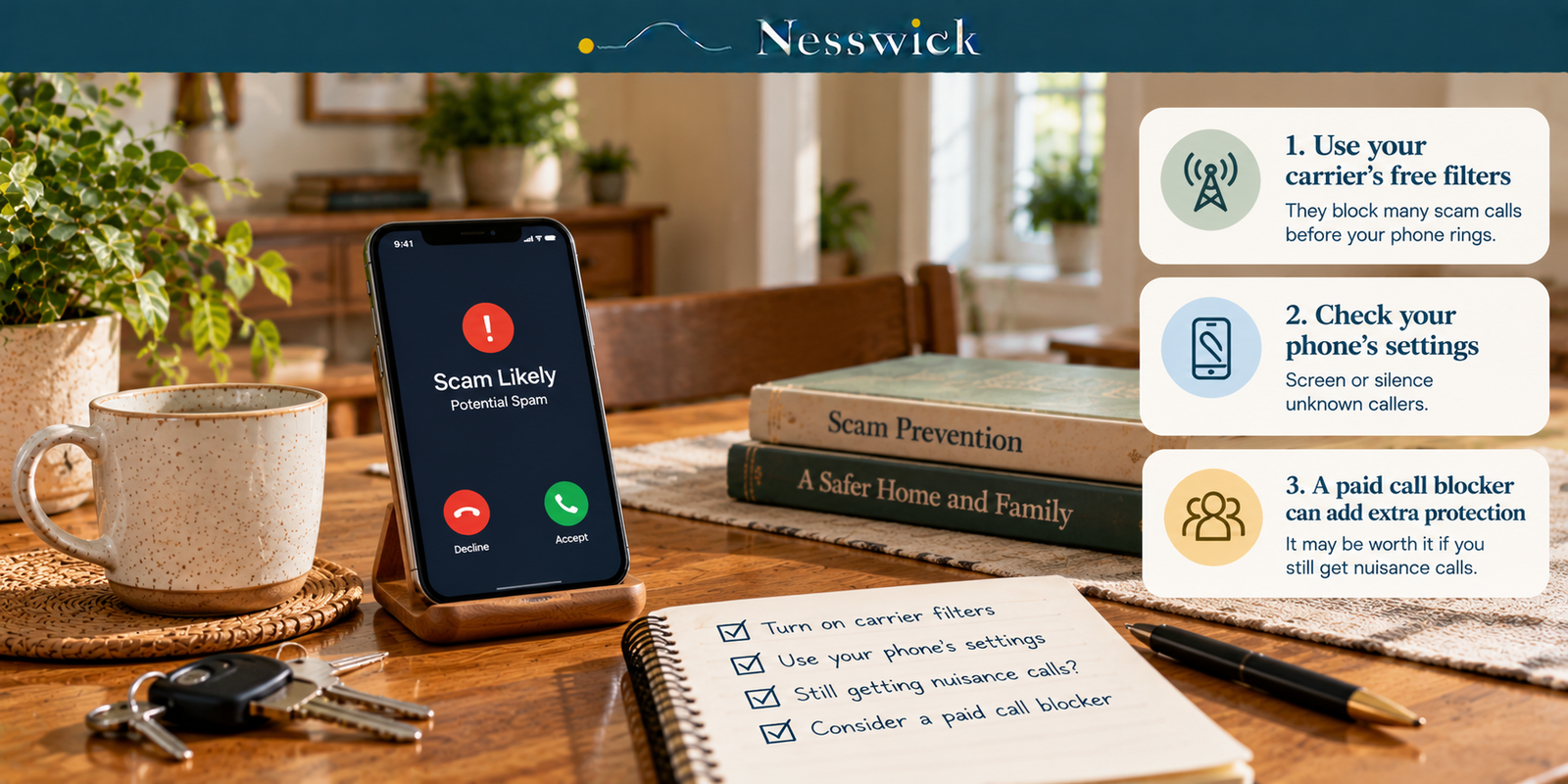
When a Paid Call Blocker Is Worth It
Read Guide →: When a Paid Call Blocker Is Worth ItRoboKiller advertises up to 99% blocking. Nomorobo advertises 100%. These are vendor claims, not independently verified results. Start with free…
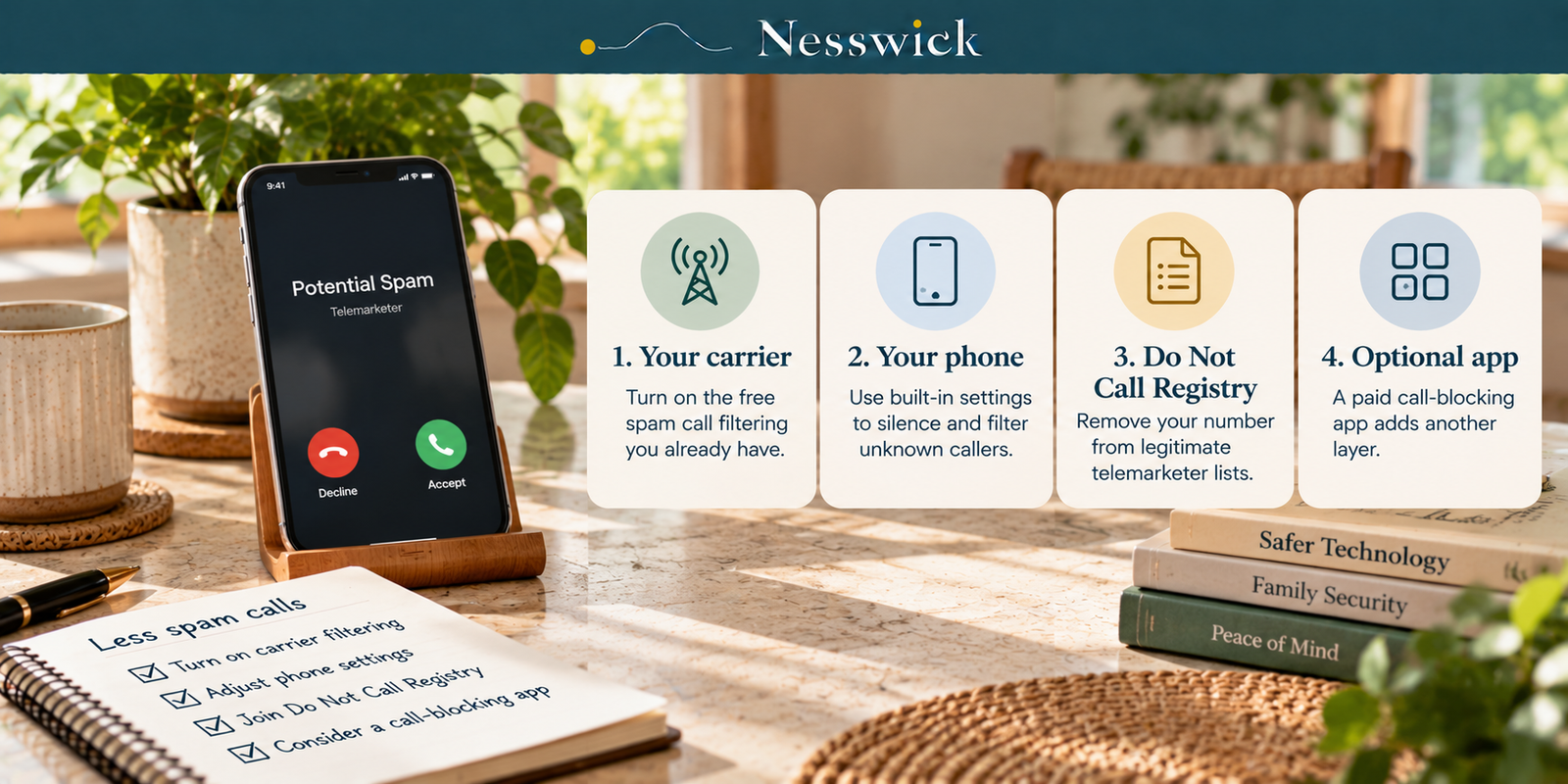
How to Reduce Spam Calls and Robocalls
Read Guide →: How to Reduce Spam Calls and RobocallsYour carrier already filters spam calls for free, and most people never turn it on. The four layers in order,…
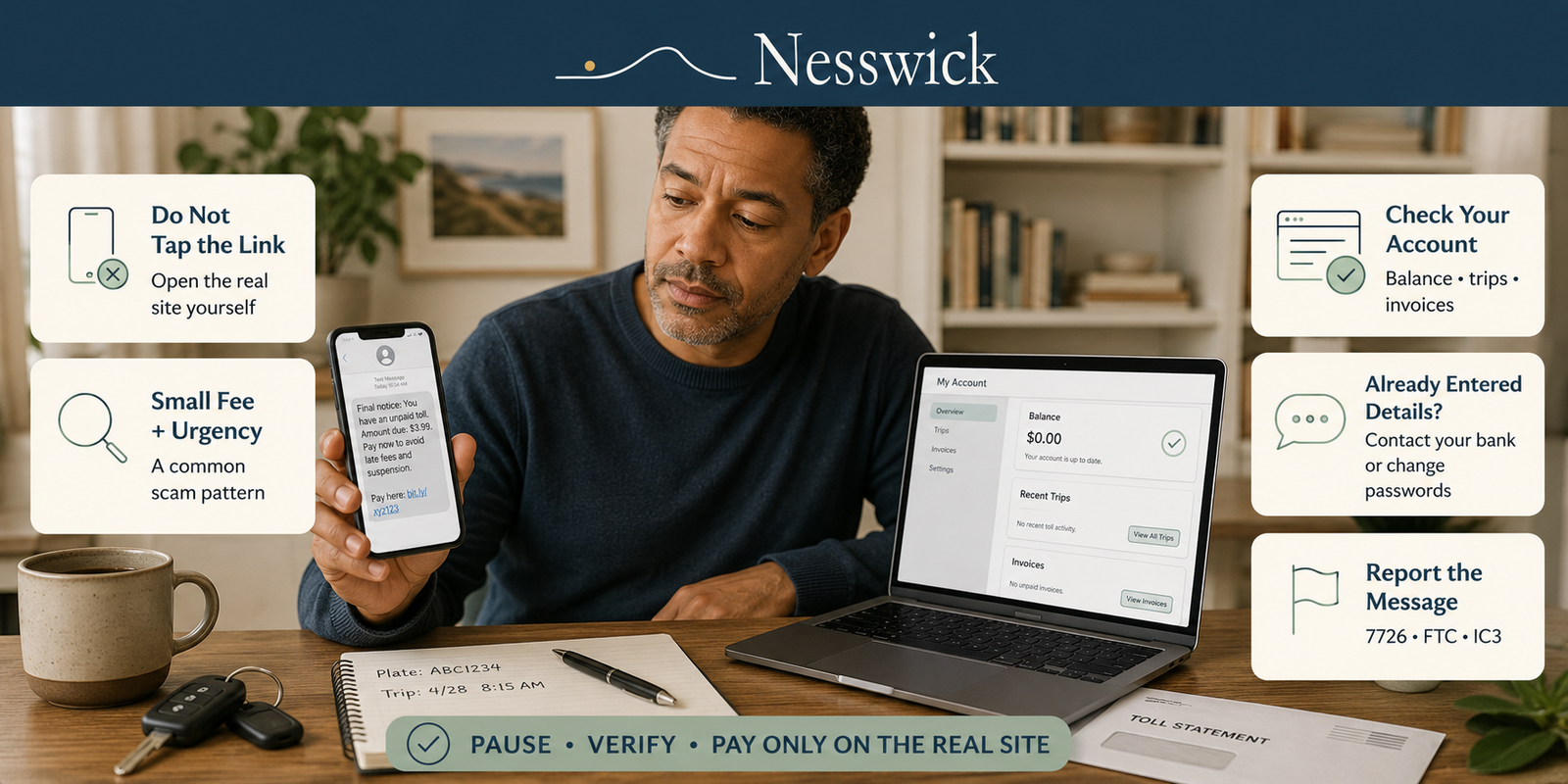
Unpaid Toll Text Scam: How to Tell If a Text Is Fake
Read Guide →: Unpaid Toll Text Scam: How to Tell If a Text Is FakeLearn how to spot a fake unpaid toll text, verify independently, and avoid paying through scam links.
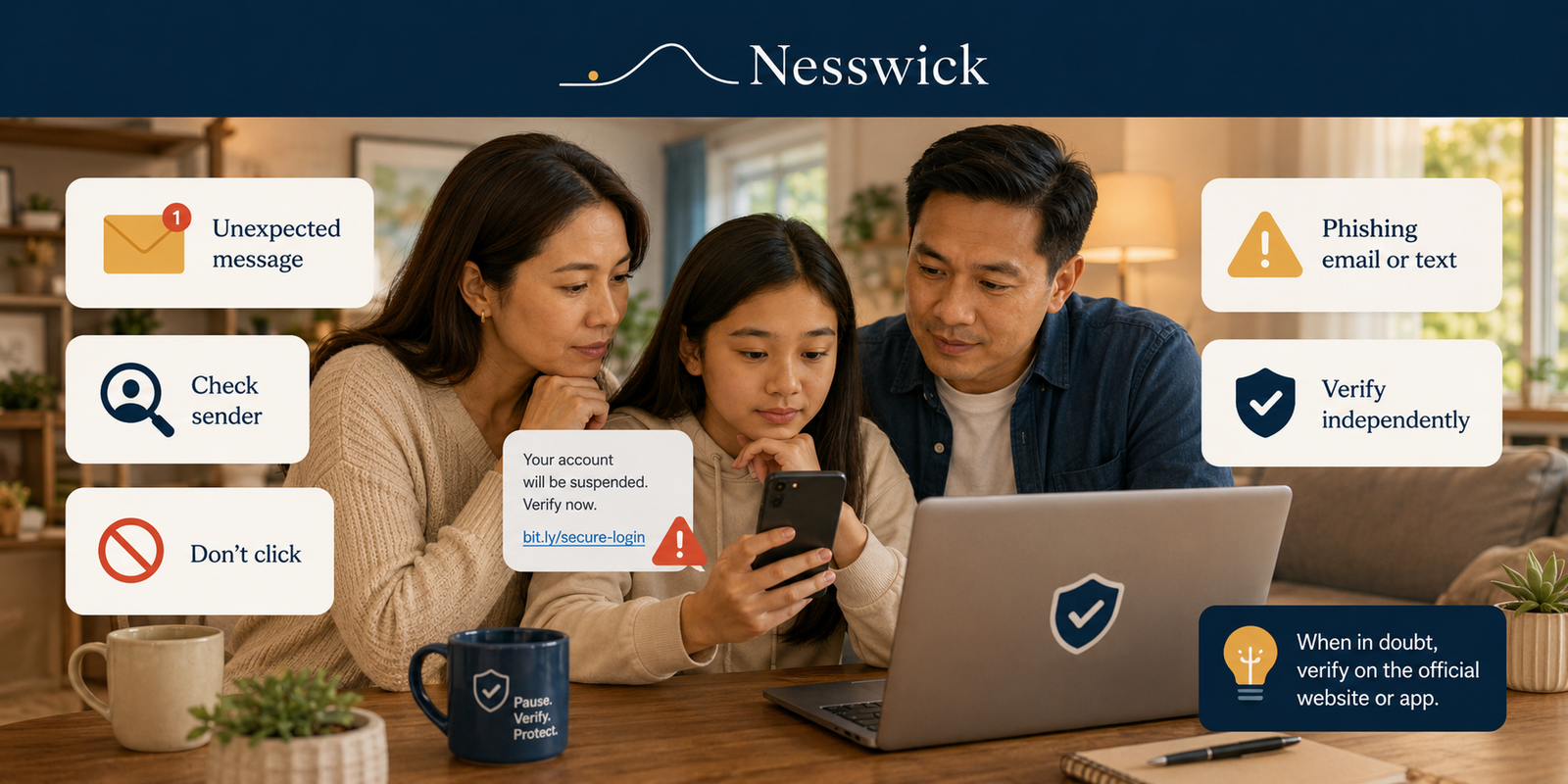
How to Spot a Phishing Email or Text Message
Read Guide →: How to Spot a Phishing Email or Text MessageA message lands in your inbox or on your phone. It looks like your bank, a delivery company, a toll…

What to Do If You Get Scammed: How to Report Fraud and Protect Your Money
Read Guide →: What to Do If You Get Scammed: How to Report Fraud and Protect Your MoneyRealizing that you have been scammed can create panic, embarrassment, and an urgent desire to fix everything at once. The…
What this section helps with
- Recognize common phishing, impersonation, and payment-scam patterns.
- Understand the pressure tactics scammers rely on most often.
- Protect older or less tech-confident family members from targeted scams.
- Respond calmly and safely if a scam attempt happens.
- Know where to report scams once they’re identified.
Tools we may cover
This category may cover call-blocking apps, scam-message reporting tools, and fraud-awareness resources. We describe what these tools generally do, without ranking or promoting a specific provider here.
What these tools cannot guarantee
Scam-detection and call-blocking tools can reduce exposure to known scam patterns, but they cannot catch every new or evolving scam, and they cannot replace careful judgement in the moment.
How Nesswick evaluates this category
Our assessments of scam-protection tools follow the same evidence-based approach described in How We Test and Editorial Policy.
Not sure where to begin? Start Here.