

Best Data-Removal Services for Families
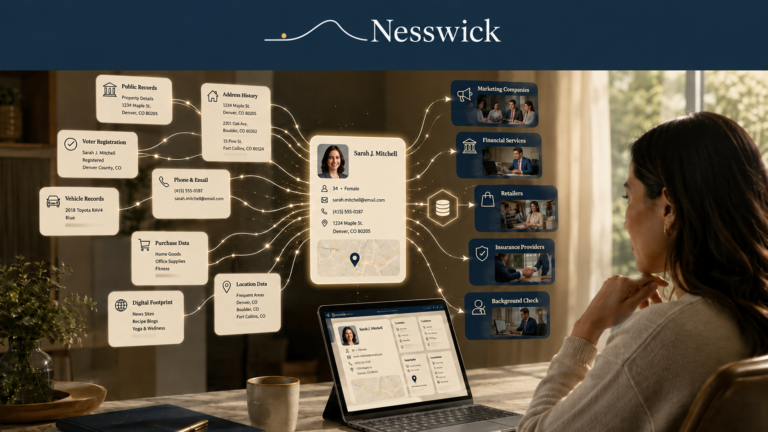
Search almost any family member’s name online and something usually turns up: a home address, a phone number, a list of relatives, sometimes an age or a past employer, all gathered by data brokers and people-search sites and made available to anyone willing to look. When it’s not just one name but a whole household, cleaning this up can feel like several jobs stacked on top of each other rather than one.
A number of services now offer to do this work on an ongoing basis, and a few structure their plans specifically around covering more than one person. This guide compares the best data-removal services for families based on what each provider’s current official documentation actually says about multi-person coverage, what independent research has found about how well removal services work in general, and how to compare options without assuming any single company is the automatic right choice for every household.
Nesswick has not tested these services hands-on. What follows draws on each provider’s current official pricing pages, an independent Consumer Reports investigation conducted with the digital-safety group Tall Poppy, and Federal Trade Commission guidance on how data brokers operate. We name no single universal winner, because the right fit depends on how many people need coverage, how much time you’re willing to spend yourself, and what you’re trying to solve.
Short Answer
There is no single data-removal service that is best for every family. The more useful question is how many people in your household actually need coverage, whether you’d rather pay for that to be handled automatically or do it yourself for free, and how much ongoing convenience is worth to you.
Some providers, including DeleteMe and Incogni, currently sell a distinct family-style plan that covers a set number of people under one subscription. Optery, by contrast, currently prices its paid tiers per individual, so a household pays roughly per person even though a free tier exists. None of these services, and no manual effort either, removes every listing or keeps information off the internet permanently. Independent testing has found that a patient do-it-yourself approach can actually outperform several paid services, which is worth knowing before you assume paying automatically buys better results.
How Data-Broker Removal Works for a Household
Data brokers and people-search sites compile personal details, often from public records, and package them into profiles that anyone can search. For a family, this typically means each adult (and sometimes each older child) has a separate set of listings scattered across dozens of these sites, which is why the task multiplies with each additional person rather than staying the same size.
The detail that shapes this whole category, for one person or five, is that removal doesn’t stay finished. Brokers rebuild profiles from fresh public records over time, which is why every option here, paid or free, is really an ongoing commitment rather than a one-time cleanup. We cover why information keeps returning and how long each cycle tends to take in How Long Data Removal Takes and Why Information Comes Back.
Free Steps Worth Trying First
Before comparing paid plans, it’s worth doing the free things that reduce exposure regardless of what you decide later. Search each family member’s name to see what actually appears; several providers, including Optery, offer a free exposure scan that maps this out without requiring payment. Google also provides a free tool to request removal of certain personal information from its search results, which is separate from removing the information from the broker’s site itself.
You can also submit opt-out requests yourself, broker by broker, for each family member. It’s genuinely tedious across a whole household, which is exactly the convenience a paid service is selling. We walk through the full time-versus-money tradeoff, including what a subscription buys you that manual effort doesn’t, in Data Removal Service vs. DIY: Is It Worth Paying?
What Families Should Actually Compare
Once you’re comparing the best data-removal services for your household, a handful of details matter more than marketing language.
- How many people a plan actually covers. “Family” means different things to different providers. Check the current official pricing page for the exact number of people included before assuming everyone in your household is covered.
- Whether children can be added. Official documentation we reviewed did not clearly spell out age requirements or child-specific handling for every plan, so if you need to cover a minor, confirm directly with the provider rather than assuming.
- How coverage is billed. Some providers charge one price for a household plan; others price per individual, so a family of four may cost meaningfully more than a single-person subscription implies.
- Removal approach and cadence. Fully automated scanning, human-assisted custom removals, or a mix, and how often rescans happen, since re-listing is the ongoing problem.
- Reporting. Whether you actually get a report showing what was found and what was removed, so the subscription isn’t a black box.
- Current pricing. Promotional and renewal pricing both change; verify the current figure on the provider’s own site before subscribing rather than relying on any figure quoted here or elsewhere.
Honest Options to Consider
Rather than crown a winner, it helps to understand how these three providers are actually structured for multiple people, based on their current official pricing pages.
DeleteMe sells a dedicated Family Protection plan that currently covers four people under a single subscription, alongside its Single and Couple plans. All DeleteMe plans include periodic privacy reports and a mix of automated and custom removal requests, and the service is restricted to U.S. residents. This structure suits households that want one straightforward household-sized plan rather than juggling several individual accounts.
Optery currently prices its paid tiers (Core, Extended, and Ultimate) per individual person, and its official pricing page does not list a discounted multi-person household bundle. It does offer a free Basic tier with a personalized exposure report and self-service removal tools at no cost, which can be useful for seeing a family’s exposure before committing to a paid tier for each person. A family choosing Optery’s paid tiers should expect to pay roughly per person rather than one flat household price.
Incogni offers both a Family plan and a Family Unlimited plan, each currently covering up to five people under shared family-account management, in addition to its Standard and Unlimited individual plans. This makes it one of the few options here built specifically around a larger household from the start.
Pricing, exact broker counts, and plan features change over time and can also vary by region, so treat the structural details above as a starting point and confirm current numbers directly on each provider’s site.
Comparing the Best Data-Removal Services at a Glance
| Service | Household structure | Free starting point | Removal approach | Worth noting |
|---|---|---|---|---|
| DeleteMe | Dedicated Family plan (currently 4 people) | No free tier; paid from the start | Automated + custom removals, human-assisted reports | U.S. residents only |
| Optery | Priced per individual; no household bundle listed | Free Basic tier with exposure report | Automated scans; human-assisted at higher tiers | Costs scale with each added family member |
| Incogni | Dedicated Family / Family Unlimited plans (currently up to 5 people) | No free tier; paid from the start | Automated removals; custom removals on higher tier | Family account management included |
This table reflects each provider’s current structure, not a ranking. No service in it has been independently shown to remove everything, and none is a Nesswick “pick” or “winner.”
What Independent Testing Actually Found
A 2024 Consumer Reports investigation, conducted with the digital-safety organization Tall Poppy, offers the clearest independent look at how these services perform in practice. Researchers recruited 32 volunteers, split into groups tied to seven removal services, including DeleteMe and Optery, plus a group that opted out manually, and tracked removal of personal information from 13 prominent people-search sites over four months.
The results were sobering for the industry as a whole: across the 28 volunteers assigned to a paid service, only about 35 percent of the personal-information listings found were removed after four months, with wide variation between individual services. The manual opt-out group, working without any paid service, achieved a 70 percent removal rate over the same period, making it the most effective approach CR tested, though still far from complete.
The researchers were upfront about the limits of their own study: a small, non-random sample of volunteers, limited personal information provided to each service to protect participants’ privacy, and no follow-up check on whether removed listings later reappeared. It’s a genuinely useful data point, not proof that any specific service will perform identically for your family today. Incogni was not among the services CR tested in this study.
Who a Paid Family Plan May Suit, and Who Might Prefer DIY
A household covering several people and wanting one subscription with regular reports, rather than tracking separate opt-outs for each family member, may find a dedicated family plan like DeleteMe’s or Incogni’s a reasonable fit for the convenience it buys.
A family that wants to see its actual exposure before spending anything, or that only needs coverage for one or two people rather than the whole household, may prefer starting with a free scan, such as Optery’s, before deciding whether a paid tier is worth it.
A family with the time and patience to repeat the process every few months may reasonably decide that manual opt-outs, done consistently, are enough, particularly given what the Consumer Reports data found about how manual effort compared with paid services.
These are starting points, not rules. Some households will reasonably combine a free scan with occasional manual opt-outs and skip a subscription altogether.
Practical Advice for Families
Start by mapping out exposure for every adult in the household using a free scan, rather than guessing which family member is most exposed. Decide whether everyone genuinely needs ongoing coverage or whether the concern really centers on one or two people, since that changes whether a household-sized plan makes financial sense.
If you do subscribe to a service, treat it as one layer rather than a complete fix, and read the progress reports rather than assuming the subscription is quietly working in the background. Expect some brokers to stay outside any service’s coverage, and expect re-listings between cycles.
Because reducing what strangers can find about your family is related to, but distinct from, preventing identity theft or fraud, it’s worth pairing this work with the broader basics covered in our Identity Protection section, rather than treating data removal alone as a complete safeguard.
Bottom Line
The best data-removal approach for your family is the one that matches your household’s size, budget, and willingness to repeat the work, not whichever brand markets itself loudest. DeleteMe and Incogni currently build multi-person coverage into a dedicated family plan; Optery currently prices per person but offers a free way to see your exposure first. Independent testing shows every option, paid or manual, falls short of removing everything, and that a consistent do-it-yourself effort can outperform some paid services. Start with a free scan, decide how many people genuinely need ongoing coverage, and choose from there.
Frequently Asked Questions
What is the best data-removal service for families?
There is no single best service for every family. DeleteMe and Incogni currently offer dedicated multi-person family plans, while Optery prices per individual but includes a free tier. The right fit depends on household size, budget, and how much you want handled automatically.
Can one plan cover my whole family?
It depends on the provider. DeleteMe’s Family plan and Incogni’s Family plans currently cover a set number of people under one subscription. Optery currently prices by individual, so covering a whole family means paying per person.
Can data-removal services include children?
Current official documentation we reviewed did not clearly specify age requirements or child eligibility for every plan. If you need to cover a minor, confirm directly with the provider before subscribing.
Can I remove my family’s information for free?
Yes, using a free exposure scan as a map and then submitting opt-out requests directly to each broker for each family member. It takes real time, which is what a paid service is designed to save you.
Do these services remove everything?
No. Independent testing found paid removal services removed roughly a third of tracked listings after four months, and even the best-performing service tested fell short of full removal. Manual opt-outs performed better in that same study but still weren’t complete.
Is data removal the same as identity theft protection?
No. Data removal reduces how much personal information is easy to find, which can help reduce exposure, but it is not a substitute for fraud-prevention steps like credit freezes or monitoring.



Affiliate Disclosure
Some links on this page may be affiliate links, which means Nesswick may earn a commission if you subscribe through them, at no extra cost to you. This never changes our editorial judgment, and we recommend free steps before any paid product whenever the free step is the right first action.
Sources and Methodology
This guide was prepared without hands-on testing, purchasing, or account setup by Nesswick. Provider details on family and household coverage were verified directly against each company’s current official pricing pages. Effectiveness context comes from a 2024 Consumer Reports investigation conducted with Tall Poppy, and background on data brokers comes from Federal Trade Commission reporting. Pricing, plan structure, and broker coverage change over time and were current only as of the review date below; verify details directly with each provider before subscribing. We name no universal winner, do not reproduce third-party reviews, and have kept official information, independent evidence, and Nesswick’s own editorial judgment distinct throughout.
Last reviewed and verified: August 3, 2026.