

Best Identity-Theft Protection for Families in the US: A Buyer’s Guide
Choosing identity-theft protection for a whole family can feel like wading through marketing claims. This guide takes a calmer approach: it explains the criteria that actually matter for households, points to the free protections every family in the United States should put in place first, and describes how well-known paid options meet those criteria, based on current official information.
Nesswick has not tested these services hands-on. What follows draws on guidance from the Federal Trade Commission and IdentityTheft.gov, current information published directly by Equifax, Experian, and TransUnion, and official plan details from Aura and LifeLock. We name no single universal winner, because the right combination of free steps and, optionally, a paid plan depends on your household’s size, situation, and comfort with doing the work yourself.
This guide is the starting point for Nesswick’s identity protection coverage, where we’ll continue adding practical, evidence-led guidance for households, including our guide to identity theft protection for seniors.
Short Answer
For most families, the highest-value first step is free: place a credit freeze with each of the three major credit bureaus for every adult, consider a fraud alert, and freeze a child’s credit where the bureaus allow it. IdentityTheft.gov offers a free, personalized recovery plan if theft does occur. A paid family plan from a provider such as Aura or LifeLock can add consolidated monitoring, specialist restoration support, and identity-theft insurance up to a stated ceiling, but no plan, free or paid, can prevent identity theft outright or guarantee recovery. These services are designed to help you detect problems earlier and respond more effectively.
Free Protections First, for the Whole Family
Before comparing paid plans, it’s worth putting the free protections in place, since they address the risk families worry about most: someone opening a new account in a family member’s name. According to the Federal Trade Commission, a credit freeze is free to place and lift at each of the three major bureaus and does not affect your credit score. Because each bureau maintains a separate file, a freeze has to be requested separately with Equifax, Experian, and TransUnion to be effective everywhere.
A fraud alert is also free. Placing an initial fraud alert with just one bureau is enough, because that bureau is required to notify the other two. An initial alert currently lasts one year and can be renewed; an extended alert, available to confirmed identity-theft victims who file a report, lasts seven years.
For children, the three bureaus each offer a process for freezing a minor’s credit file, which is free and can help prevent the specific problem of someone opening accounts in a child’s name, often undetected for years. And if identity theft does happen to anyone in the household, IdentityTheft.gov provides a free, step-by-step recovery plan, sample dispute letters, and guidance for reporting the problem.
If your family’s contact details, home address, or other personal information are already circulating on people-search sites, that exposure can make phishing and impersonation attempts more convincing. Our guide to data-removal services for families covers how to reduce that kind of exposure, and a leaked or reused password is a common way accounts get taken over in the first place, which our guide on what to do if your password is leaked addresses directly.
What Actually Matters When Comparing Family Plans
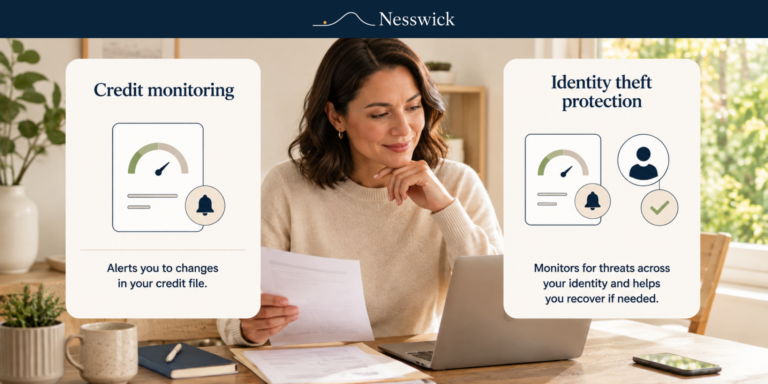
Once the free steps are in place, a few criteria matter more than marketing claims when deciding whether a paid plan is worth adding. Coverage should match your household: check how many adults and children a plan actually includes, since some services price per person while others bundle a set number of family members. Monitoring scope varies too, so look at whether credit monitoring spans all three bureaus and what kinds of personal information, such as Social Security numbers, bank accounts, or dark-web data, are actually covered. For a closer look at whether paying for identity-theft protection makes sense at all, see our guide on is identity theft protection worth it.
Restoration support, meaning hands-on help from a specialist if theft happens, is often the most practical benefit a paid plan offers. Identity-theft insurance is typically offered up to a stated reimbursement ceiling for eligible expenses, subject to plan terms and exclusions, so it’s best read as a conditional ceiling rather than a guaranteed payout. Finally, ease of use matters for less technical family members, since a tool only helps if the household actually uses it.
How Aura and LifeLock Compare, Descriptively
The two best-known family-oriented options in this category are Aura and LifeLock (now part of Norton). Based on their current official information, both bundle credit monitoring across the three major bureaus, dark-web and data-breach monitoring, identity restoration support, and identity-theft insurance, and both offer plans structured around covering more than one family member rather than a single individual.
They differ in some of the specifics, and those specifics change over time, so they’re worth checking directly rather than relying on any fixed figure. Aura’s family plans add features aimed at children and teens, including parental controls and monitoring aimed at online safety, with child members generally receiving a narrower set of monitoring features than adults on the same plan. LifeLock’s plans are tiered by number of adults and whether children are included, with reimbursement ceilings and the number of credit bureaus monitored increasing at higher tiers. Rather than declare a winner, the more useful exercise is to compare each provider’s current plan page against the criteria above for your specific household.
What These Services Cannot Do
Being clear about the limits protects families from false confidence. Monitoring can help detect possible misuse and alert you to it; it cannot prevent identity theft from happening. Identity-theft insurance may reimburse eligible expenses up to a plan’s stated limit, subject to terms, conditions, and exclusions that vary by provider and plan; it is not a guarantee of full recovery. And no paid plan replaces the free credit freeze and fraud alert, which remain the most direct way to stop a new account from being opened in your name in the first place.
Deciding Whether a Paid Plan Is Right for Your Family
A paid plan tends to make the most sense for larger households that want monitoring, restoration support, and insurance consolidated in one place rather than managed piecemeal, or for families who have already experienced a data breach or identity-theft attempt and want dedicated restoration support on hand. Families who are comfortable placing their own freezes and alerts, checking credit reports periodically, and handling recovery steps through IdentityTheft.gov if something goes wrong may reasonably decide the free protections are sufficient for now. Either path is legitimate; the paid plan buys convenience and support, not a guarantee that the free steps don’t already provide.
Bottom Line
The best identity-theft protection for most families starts with the free credit freeze and fraud alert for every adult, plus a child credit freeze where applicable, and awareness that IdentityTheft.gov offers a free recovery plan if theft occurs. A paid family plan from a provider such as Aura or LifeLock can add consolidated monitoring, restoration support, and an insurance ceiling, based on current official plan information, but it supplements rather than replaces those free steps. We do not name a single best provider; the right choice depends on your household’s size, risk, and how much you want handled for you.
Frequently Asked Questions
What is the best identity theft protection for families?
There is no single best option for every household. Start with the free credit freeze and fraud alert for each adult, then compare paid family plans such as Aura or LifeLock on coverage, monitoring scope, and restoration support if you want additional help.
Is a credit freeze really free?
Yes. According to the Federal Trade Commission, placing or lifting a credit freeze is free at each of the three major credit bureaus and does not affect your credit score.
Can I freeze my child’s credit?
Yes, where the credit bureaus offer it. Equifax, Experian, and TransUnion each provide a process for freezing a minor’s credit file, which can help prevent new accounts being opened in a child’s name.
Does a family plan prevent identity theft?
No. Paid plans are designed to help detect and respond to potential identity theft, and to support recovery through restoration specialists and insurance; they cannot prevent theft from being attempted.
How much do family identity-theft protection plans cost?
Pricing and plan tiers change over time and vary by number of family members covered, so it’s best to confirm current pricing directly on the provider’s official pricing page before deciding.
Is Aura or LifeLock better for families?
We do not name a winner. Both offer family-oriented plans with credit monitoring, restoration support, and identity-theft insurance according to their official information; compare their current plan pages against your household’s specific needs.


Related Resources

Affiliate Disclosure
Some links on this page may be affiliate links, which means Nesswick may earn a commission if you subscribe through them, at no extra cost to you. This never changes our editorial judgment, and we recommend free steps before any paid product whenever the free step is the right first action.
Sources and Methodology
This guide is based on current guidance from the Federal Trade Commission and IdentityTheft.gov, official information published by Equifax, Experian, and TransUnion, and official plan and feature descriptions from Aura and LifeLock. Nesswick did not perform hands-on testing of these services; no ranking or single winner is declared. It is written for readers in the United States. Prices, plan tiers, and coverage details change over time and should be confirmed on each provider’s official page before you decide.