

Is Identity Theft Protection Worth It?
Identity-theft protection is sold with a lot of anxiety attached: ads that imply disaster is one click away, and that only a monthly subscription stands between your family and ruin. That framing makes it hard to think clearly, so let’s set it aside and ask the plain question: is identity theft protection worth it for an ordinary person?
This guide is written for readers in the United States, where the free tools and recovery routes described here apply, and it focuses on one decision only: whether identity theft protection is worth paying for. Nesswick has not tested these services hands-on, so our guidance draws on official government sources, provider documentation, and independent evidence.
The honest answer is that the most valuable first steps are free, and you can take them today without a subscription. A paid service can still be worth it, for convenience, for help recovering if something goes wrong, and for the reassurance of having support, but not because it prevents identity theft outright.
Short Answer
For most people, the right first move is to use the free protections: place a credit freeze with each of the three major credit bureaus, add a fraud alert if you want extra reassurance, and know that the government’s IdentityTheft.gov offers a free recovery plan if you ever need it. For a great many households, that combination addresses the biggest single risk: someone opening a new credit account in your name.
Paying for a service can make sense in specific situations: you want everything monitored in one place, you would rather have specialists help you clean up after theft, or you’re covering a family and value the convenience and the insurance ceiling that comes with a paid plan.
What no plan does, free or paid, is prevent identity theft outright. Marketing sometimes blurs that line; this guide tries not to.
What Identity-Theft Protection Actually Is
Part of what makes this decision confusing is that identity-theft protection is not one thing, it’s a bundle, and the pieces do genuinely different jobs. Separating them is the single most clarifying step you can take.
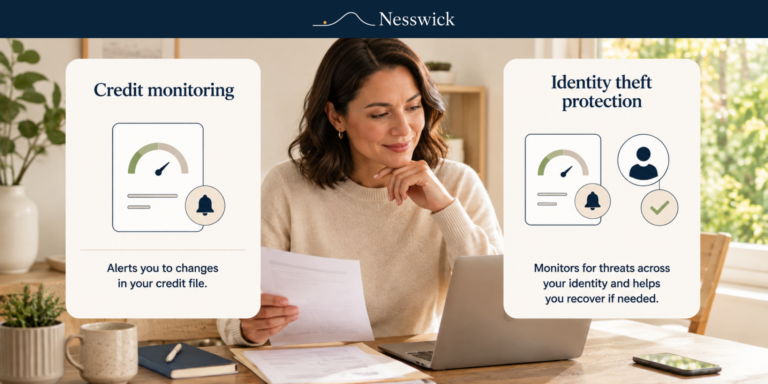
- Credit monitoring watches your credit files and alerts you when something changes, such as a new account or inquiry. It’s a detection tool: it tells you something may have happened, rather than stopping it.
- A credit freeze restricts access to your credit file so new accounts generally cannot be opened in your name; it’s a prevention-focused tool, and it’s free.
- A fraud alert asks lenders to take extra steps to verify your identity before extending new credit; it’s also free.
- Restoration is specialist help that guides you through fixing the aftermath of theft, including the calls, the paperwork, and the disputes.
- Identity-theft insurance reimburses certain eligible expenses you incur while recovering, up to a stated limit and subject to plan terms and exclusions.
A paid identity-theft protection service simply packages several of these together. Services such as Aura and LifeLock each assemble these features in their own way, mentioned here as examples of what a bundle typically contains, not as recommendations, and not ranked.
Start Free: Credit Freeze, Fraud Alert, and IdentityTheft.gov
Before you pay anyone, use the free tools. They address the core risk at no cost, and they remain valuable whether or not you ever buy a service.
A credit freeze is the strongest free step for most people. According to the Federal Trade Commission, it’s free to place and lift at each of the three major credit bureaus, Equifax, Experian, and TransUnion, and it doesn’t affect your credit score. While a freeze is in place, nobody, including you, can open a new credit account in your name, which is why it can help prevent most new-account fraud. You can temporarily lift it whenever you actually want to apply for credit, then put it back.
A fraud alert is a lighter-touch companion. It asks lenders to verify your identity before opening new credit in your name, though unlike a freeze it doesn’t stop lenders from viewing your report. It’s free, and placing it at one bureau requires that bureau to notify the other two, so a single request covers all three. An initial alert lasts one year and can be renewed; an extended alert, available to confirmed identity-theft victims, lasts seven years.
If your identity is ever misused, the FTC’s IdentityTheft.gov gives you a free, personalized recovery plan and serves as the official reporting hub. Knowing it exists takes a good deal of fear out of the situation before it ever arises.
Reducing how much of your personal information circulates publicly also helps limit the damage a scammer can do with what they find; our guide to data-removal services for families covers that step. A leaked or reused password is one of the most common ways an account actually gets taken over, so it’s worth reading what to do if your password is leaked if you haven’t already. Pairing these habits with basic scam awareness, pausing before acting on any urgent-sounding message, closes another common gap; see our Scam Protection guide.
One point deserves emphasis: these steps cost nothing, and they cover the risk that worries people most. That’s why any honest discussion of paid protection has to start here.
What a Paid Service Adds
If you would rather not manage each of these pieces yourself, that’s a legitimate reason to consider paying. Paid services typically consolidate monitoring across all three credit bureaus and the dark web into a single dashboard, provide specialist-assisted restoration if theft occurs, and include identity-theft insurance that can reimburse eligible recovery expenses up to a stated limit.
For families, plans often cover multiple adults and children under one plan; our guide to identity-theft protection for families looks at that comparison in more detail. The genuine value on offer is time and support, someone to call, and a single place to watch, rather than prevention.
What Paid Protection Cannot Guarantee
Being clear about the limits is part of being trustworthy. Monitoring can help you detect possible misuse and alert you to it; it does not prevent identity theft from happening. Identity-theft insurance can reimburse eligible expenses up to a stated limit, subject to terms and exclusions that vary by plan, it is not a promise that you’ll recover every dollar or that a claim will be approved.
And buying a service doesn’t replace the free freeze and fraud alert; those remain your front line regardless of what you pay for. A paid plan sits on top of the free protections rather than substituting for them.
Identity Protection Terms, Made Clear
This table is a plain-language reference for the terms used throughout this guide.
| Term | What It Is | What It Does | What It Does Not Do |
|---|---|---|---|
| Protection service | A paid bundle | Combines monitoring, restoration, and insurance | Prevent identity theft |
| Credit monitoring | Watching your credit files | Alerts you to changes | Stop misuse before it happens |
| Credit freeze | Locking your credit file | Can help prevent most new-account fraud, for free | Protect accounts you already have |
| Fraud alert | A verification flag | Prompts lenders to verify you, for free | Block new credit outright |
| Restoration | Recovery assistance | Helps you fix the aftermath of theft | Undo all harm already done |
| Identity-theft insurance | Expense reimbursement | Covers eligible costs up to a stated limit | Guarantee full recovery |
The misconceptions this table corrects are worth naming directly: monitoring does not prevent theft, and insurance does not guarantee you’ll be made whole.
How Common Is Identity Theft, Really?
It helps to right-size the risk: common enough to prepare for, not so catastrophic that panic is warranted.
Two government figures give useful perspective, and they measure different things. Drawing on a national survey, the Bureau of Justice Statistics found that about 23.9 million people, roughly 9% of U.S. residents age 16 or older, had experienced identity theft in the prior 12 months as of 2021, with most incidents involving the misuse of a single existing account, such as a credit card. Separately, the FTC’s Consumer Sentinel Network logged more than 1.1 million identity-theft reports in 2024.
Those aren’t the same measure: the BJS survey estimates how many people were affected, while the FTC figure counts how many reports were filed, which depends partly on how many people choose to report. Both point the same way, toward a real and widespread problem, without either one justifying alarm. The sensible response is to put the mostly free precautions in place and get on with your life.
When Free Is Enough, and When Paying May Help
Free protections are often enough if your exposure is low, you’re not actively opening new credit, and you’re comfortable placing a freeze and keeping an eye on your accounts and credit reports yourself. Many careful people never need more.
Paying may be worth it if you’re short on time and want consolidated monitoring, if your exposure is elevated for a specific reason, after a data breach, during a period of heavy credit activity, or if you travel often, or if you want a family plan with assisted restoration and an insurance ceiling. For those readers, a service buys convenience and support, not a guarantee the free steps don’t already provide.
Questions for the Middle Reader
If you’re somewhere in between, a few concrete questions usually settle it: Will you actually place and manage a credit freeze yourself, or would you rather it were handled for you? Do you have the time to check your accounts and credit reports regularly? Is your exposure elevated right now for a specific reason? Would specialist help during a stressful recovery be worth a monthly fee to you?
If you find yourself wanting it handled and your exposure is up, a paid plan is a reasonable choice. If you’re comfortable doing the free steps and your exposure is ordinary, you can confidently skip it, at least for now.
Bottom Line: Is Identity Theft Protection Worth It?
Set up the free credit freeze and fraud alert first. For most people, that’s the highest-value action, and it costs nothing.
Consider a paid service if you want everything monitored in one place, prefer specialist help recovering from theft, or are covering a family, remembering that such a service is designed to help you detect and respond, not to prevent theft outright. Identity theft is common enough to prepare for and not so likely that fear alone should drive your decision.
Frequently Asked Questions
Does identity-theft protection prevent identity theft?
No. It’s designed to help detect possible misuse and support your response; it does not prevent identity theft from happening.
Is a free credit freeze enough on its own?
For many people, it addresses the biggest single risk, new-account fraud, though it doesn’t protect accounts you already have open.
What’s the difference between a credit freeze and a fraud alert?
A freeze restricts access to your credit file so new accounts generally can’t be opened; a fraud alert asks lenders to verify your identity first but still allows your report to be viewed.
What does identity-theft insurance actually cover?
It reimburses eligible expenses up to a stated limit, subject to plan terms and exclusions, not all possible losses, and not automatically.
Do my children or older relatives need protection?
It depends on their exposure, and coverage varies by plan. For guidance specific to older adults, see our guide to identity theft protection for seniors.
How much does a paid plan cost?
Pricing varies by provider, plan tier, and how many people are covered, and it changes over time, so it’s best to confirm current pricing directly on a provider’s official page before subscribing.


Related Resources

Affiliate Disclosure
Some links on this page may be affiliate links, which means Nesswick may earn a commission if you subscribe through them, at no extra cost to you. This never changes our editorial judgment, and we recommend the free steps before any paid product whenever the free step is the right first action. This guide is written to remain useful even if you never click a link.
Sources and Methodology
This guide was prepared without hands-on testing by Nesswick. It draws on official guidance from the Federal Trade Commission and IdentityTheft.gov for the free protective steps, on government statistics from the Bureau of Justice Statistics and the FTC’s Consumer Sentinel Network for the scope of the problem, and on official documentation from identity-protection providers for plan-specific claims. Plans, pricing, and coverage details change over time and should be confirmed on each provider’s official page before you decide. We name no single winner, we do not copy third-party review language, and we distinguish official information, independent evidence, and editorial judgment throughout.
Sources Referenced
- Federal Trade Commission – Credit Freezes and Fraud Alerts
- IdentityTheft.gov – Report Identity Theft and Get a Recovery Plan
- Bureau of Justice Statistics – Victims of Identity Theft, 2021
- Federal Trade Commission – Consumer Sentinel Network Data Book 2024
- Aura – Official Plan and Feature Information
- LifeLock (Norton) – Official Plan and Feature Information