
Fraud Alert vs Credit Freeze: Which One Should You Use?
A fraud alert and a credit freeze are the two free tools US consumers can use to make it harder for identity thieves to open credit in their name. They are easy to confuse, they work differently, and neither one is a paid product.
Short Answer
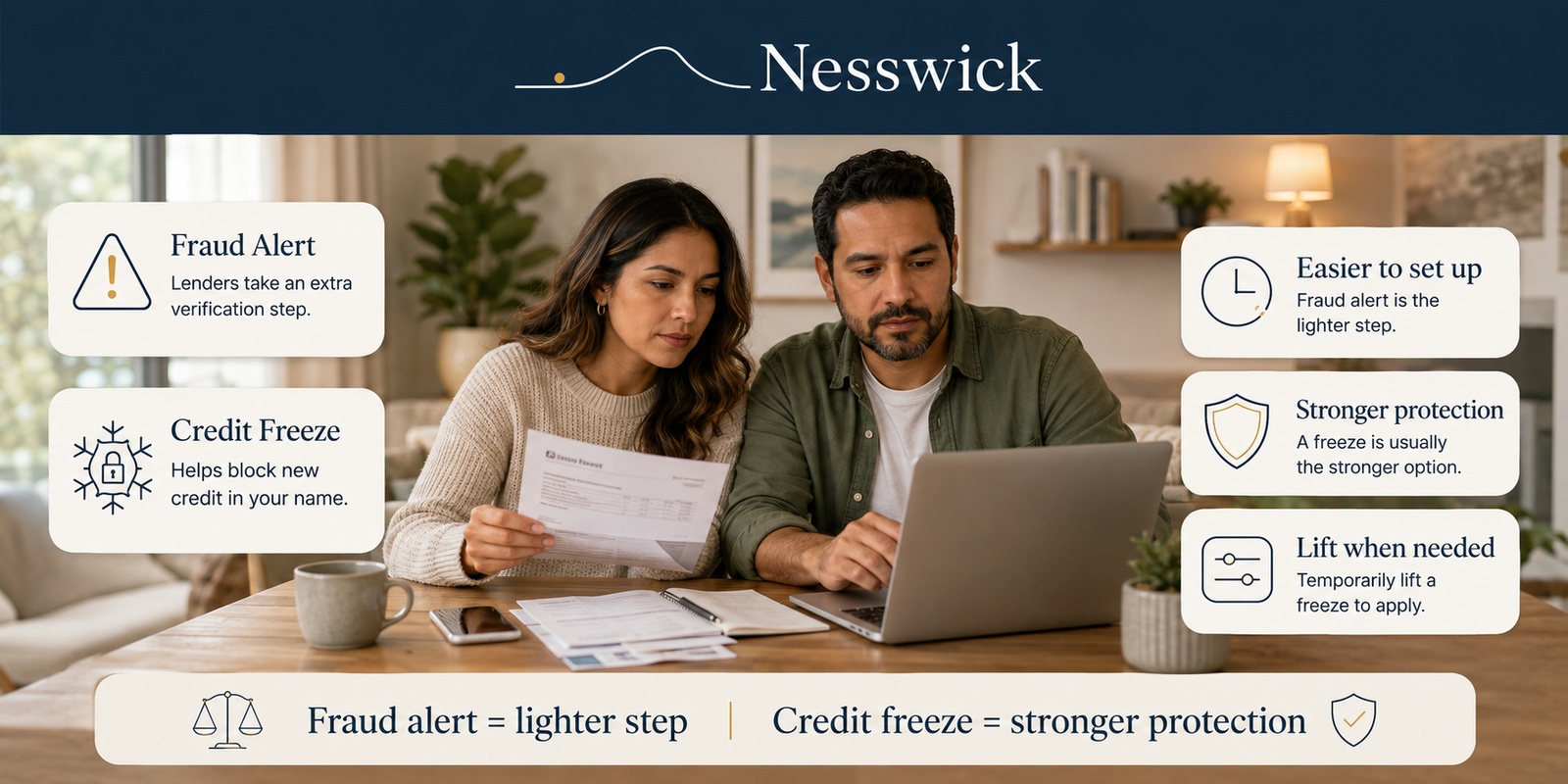
The difference between a fraud alert and a credit freeze comes down to verification versus restriction. A fraud alert puts a notice on your credit file asking businesses to take extra steps to verify your identity before they open a new account in your name. A credit freeze restricts access to your credit report, so most lenders cannot pull it to approve new credit until you lift it.
Both are free, and both are backed by federal law. In short:
- After a data breach or a lost wallet, a fraud alert is the lighter step, and one bureau passes it to the other two.
- To make it significantly harder for someone to open new credit in your name, a credit freeze is stronger, though you place it at each of the three bureaus.
- You can use both at once, and many people do.
Neither is a guarantee against fraud, and neither protects the accounts you already have.
Fraud Alert vs Credit Freeze at a Glance
| Fraud Alert | Credit Freeze | |
|---|---|---|
| Main purpose | Asks lenders to take extra steps to verify identity before opening new credit | Restricts access to your credit report so most new credit cannot be approved |
| Blocks access to your report? | No — creditors can still see it | Yes, for most new-credit decisions, until you lift it |
| Cost | Free | Free to place, lift, and remove |
| Credit score impact | None | None |
| Duration | Initial: 1 year, renewable. Extended: 7 years. Active duty: 1 year, renewable | Until you lift or remove it |
| Bureaus to contact | One — it must tell the other two | All three, separately |
| Can it be removed/lifted? | Yes, it can be removed before it expires | Yes, temporarily lifted or removed |
| Protects existing accounts? | No | No |
| Stops identity theft completely? | No | No |
| Best for | A light caution layer, or if you apply for new credit often | Stronger prevention of new-account fraud |
What Is a Fraud Alert?
A fraud alert is a notice placed on your credit file. According to the Federal Trade Commission, it tells businesses to check with you before they open a new credit account in your name. Your report stays available to creditors; the alert asks them to take extra steps to verify identity first.
Two things follow. It depends on the lender doing the check, so it is a caution flag rather than a hard block.
And one contact covers everyone: you reach any one of the three nationwide bureaus, and the FTC states that the bureau you contact must tell the other two. Placing alerts on your credit is free.
Fraud alerts come in three kinds:
- Initial fraud alert — one year, renewable. Anyone who feels at risk can place one; no proof of identity theft is needed. Initial fraud alerts also entitle you to a free copy of your credit reports from each of the three bureaus.
- Extended fraud alert — seven years. For confirmed victims of identity theft, and it requires an identity theft report from IdentityTheft.gov or a police report. It also removes you from prescreened credit and insurance offer lists for five years.
- Active duty alert — one year, renewable for the length of a deployment, for active duty servicemembers. It removes you from prescreened offer lists for two years.
What Is a Credit Freeze?
A credit freeze restricts access to your credit report. Because most lenders will not approve credit applications without checking a report, a freeze makes it much harder for someone to open a new account in your name. The FTC puts it plainly: while a freeze is in place, nobody can open a new credit account in your name, including you, until it is lifted. You will also see this written as fraud alert vs security freeze, and a security freeze and a credit freeze are the same thing.
From the FTC and the Consumer Financial Protection Bureau:
- Free to place, lift, and remove.
- You must contact each bureau separately — Equifax, Experian, and TransUnion.
- It lasts until you lift it, with no expiration date.
- It does not affect your credit score. The CFPB states that security freezes do not affect credit scores in any way.
- Some access continues. A limited group can still access your credit report, including creditors of an existing account you hold, certain government entities such as child support agencies, and companies you have hired to monitor your credit.
You can freeze and unfreeze your credit as often as you need. The CFPB says a bureau must place a freeze within one business day of a phone or secure-website request, and lift it within one hour of a phone or online request; mailed requests take three business days. If you know which bureau a lender will use, you can unfreeze your credit at that bureau alone.
Key Differences: Credit Freeze vs Fraud Alert
Three differences matter in practice. Effort: an alert takes one contact, a freeze takes three, plus a lift each time you apply for new credit. Strength: an alert asks lenders to verify your identity, while a freeze restricts most prospective creditors from accessing your credit file. Duration: alerts expire and need renewing, a freeze stays until you decide otherwise.
A credit freeze generally provides the stronger barrier against new-account fraud and is especially worth considering after identity theft or exposure of sensitive information. The alert still earns its place as a fast, low-effort layer when you are unsure how exposed you are.
When to Use a Fraud Alert
- You received a data breach notice and want to react quickly.
- You lost a wallet, or a document with your Social Security number.
- You apply for new credit often and would rather not lift a freeze each time.
- You want a first step today, with the option to add freezes later.
- You are an active duty servicemember heading into a deployment.
- You are a confirmed victim of identity theft and want the seven-year extended alert alongside other steps.
When to Use a Credit Freeze
- You know or strongly suspect your personal information has been misused.
- Your Social Security number appeared in a breach.
- You rarely open new credit, so the friction of lifting a freeze is minimal.
- You are protecting a child’s credit file. The FTC notes parents and legal guardians can request a free freeze for a child under 16, and 16- and 17-year-olds can request one themselves.
- You are helping an older relative, with their consent, whose credit rarely sees new applications.
Can You Have Both?
Yes. A fraud alert and credit freeze are separate mechanisms and do not cancel each other out. A common approach is to freeze at all three bureaus and add an alert as a second signal. Both are free, so using both costs nothing but setup time.
Does Either One Affect Your Credit Score?
No. Neither one affects your credit score. The CFPB states directly that security freezes do not, and a fraud alert is a notice on your file rather than a scoring factor. A freeze also does not close or interfere with accounts you already hold, so you can keep using those cards and loans while your report is frozen.
Credit Lock vs Credit Freeze: A Quick Clarification
These two get mixed up constantly. A credit freeze is a legal right: free at all three nationwide bureaus, with placing and lifting governed by federal law.
A credit lock is a product or app feature offered by a bureau. TransUnion puts the distinction this way: credit freezes are always free and provided by the credit reporting agencies, while credit lock can come as a feature of credit monitoring services.
Equifax also notes you cannot have both a freeze and a lock on your Equifax credit report at the same time. Locks can be convenient, but their terms come from a company’s user agreement rather than from statute. For the clearest legal footing, choose the freeze.
What Neither One Protects Against
Both tools work on one channel: the credit report a lender checks before approving new credit. Neither protects an existing account from unauthorized use.
Neither stops fraud that skips the credit check, such as tax refund fraud, medical identity theft, or a stolen card number. Neither prevents phishing or scams where you hand over personal information yourself. A victim of fraud in those situations needs a different response, and neither tool guarantees safety.
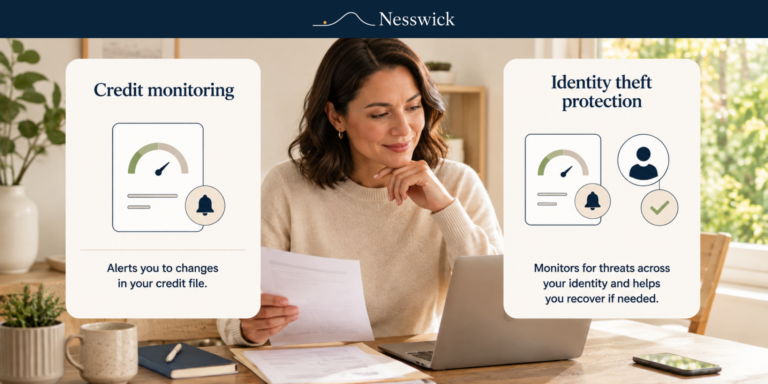
Monitoring is a different job again: a freeze is a preventive restriction, while monitoring tells you after something appears. We compare those categories in Credit Monitoring vs Identity Theft Protection.
What to Do If You Are a Victim of Identity Theft
If your identity has already been misused, these tools prevent the next problem rather than fix the current one. Current FTC guidance points people to IdentityTheft.gov, which creates a personal recovery plan and an FTC Identity Theft Report. Steps generally include:
- Contact the companies involved. Reach the fraud department of any business where an account was opened or misused and ask them to close or freeze it.
- Place a fraud alert and check your credit reports. One bureau notifies the other two. Review your reports for accounts and inquiries you do not recognize.
- Report the theft at IdentityTheft.gov. This produces your recovery plan and your identity theft report — the same document an extended fraud alert requires.
- Consider freezing your credit at all three bureaus to reduce the risk of further new-account fraud.
- Follow the recovery plan for the specific problems you found.
This is general information, not legal advice. Follow the current guidance at IdentityTheft.gov for your own situation.
Frequently Asked Questions
What’s the difference between a freeze and an alert?
A freeze restricts access to your credit report so most new credit cannot be approved until you lift it. An alert leaves the report accessible but asks businesses to verify your identity first.
Are fraud alerts and credit freezes free?
Yes, at all three nationwide credit bureaus. A freeze is also free to lift and to remove.
How long does a fraud alert last?
An initial fraud alert lasts one year and can be renewed. An extended fraud alert lasts seven years for confirmed identity theft victims with an identity theft report. An active duty alert lasts one year and can be renewed for a deployment.
How long does a credit freeze last?
Until you lift or remove it. It has no expiry date.
Do I have to contact all three bureaus?
For a fraud alert, no, because the bureau you contact must tell the other two. For a credit freeze, yes: Equifax, Experian, and TransUnion, separately.
Does a fraud alert stop lenders from seeing my credit report?
No. Your report stays accessible. The alert asks the lender to take extra steps to verify identity before extending credit.
Will a credit freeze stop all fraud?
No. It addresses credit applications that require a report check. It does not protect an existing account or stop fraud that skips the credit check.
How quickly can I unfreeze my credit?
The CFPB says a bureau must lift a freeze within one hour of a request made by phone or through its secure website. Mailed requests take three business days.
Should I pay for an identity protection service instead?
A separate decision. Freezes and alerts are free and address new-account fraud directly, while paid services mostly add monitoring and recovery support. We look at that trade-off in Is Identity Theft Protection Worth It?


Affiliate Disclosure
Some links on Nesswick are affiliate links, which means we may earn a commission if you buy through them, at no extra cost to you. That never changes our editorial judgment. The two tools compared in this article are free and require no purchase, and we recommend the free step first whenever the free step is the correct first action.
Sources and Methodology
This guide was prepared without hands-on testing. It draws on current official US sources: Federal Trade Commission consumer guidance on credit freezes and fraud alerts, IdentityTheft.gov for identity theft reporting and recovery, Consumer Financial Protection Bureau guidance on security freezes, and the official pages of Equifax, Experian, and TransUnion for how each bureau describes freezes, alerts, and credit locks. Durations, timelines, and procedures are as described by those sources at the time of writing; rules and bureau processes can change, so confirm details on the official pages before you act. The tools described here are US mechanisms. This is general information, not legal or financial advice.
Sources Referenced
- Federal Trade Commission — Credit Freezes and Fraud Alerts
- Federal Trade Commission — How To Protect Your Child From Identity Theft
- IdentityTheft.gov — Report identity theft and get a recovery plan
- Consumer Financial Protection Bureau — What is a credit freeze or security freeze on my credit report?
- Equifax — Fraud Alert, Security Freeze, or Credit Lock: What’s the Difference?
- Experian — What Is the Difference Between a Credit Freeze and a Fraud Alert?
- TransUnion — Credit Freeze