
How to File a Police Report for Identity Theft
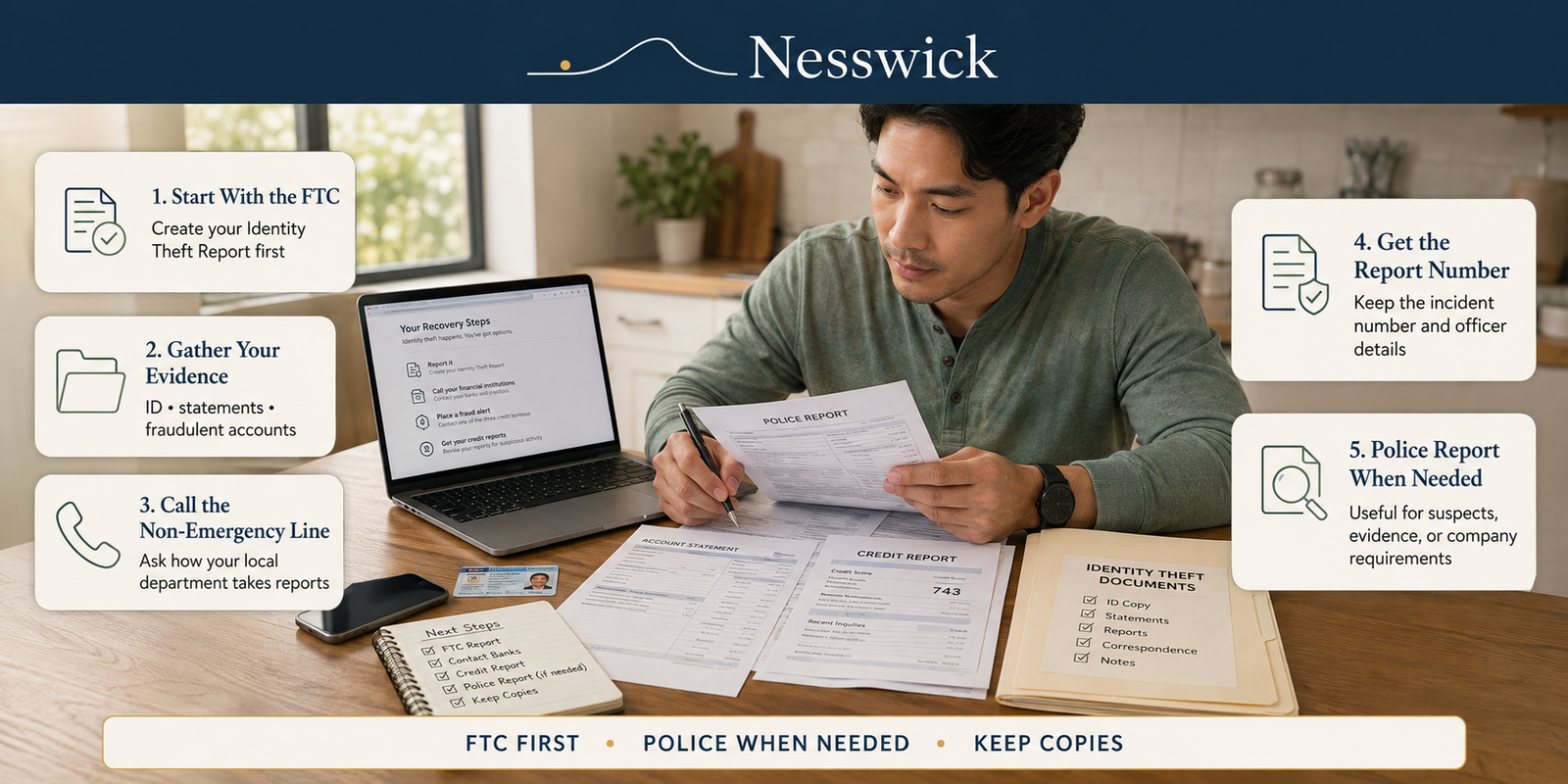
Most people search for this because a bank, a debt collector, or a credit bureau asked for a police report. That is a reasonable thing to ask for, and it is worth knowing the answer before you spend a morning at a police station: in most identity theft cases in the United States, the document that does the heavy lifting is not the police report. It is the FTC Identity Theft Report you can create for free at IdentityTheft.gov in about fifteen minutes.
A police report is still useful in specific situations. This guide covers both, in the order that actually helps.
Short Answer
Report the theft at IdentityTheft.gov first. That creates your FTC Identity Theft Report, which can support disputes, blocking requests, and other recovery steps with credit bureaus and businesses. File a local police report on top of that when you know or suspect who did it, when you have details that could help an investigation, or when a company will not accept the FTC report alone.
If you do go to the police, bring your FTC Identity Theft Report, a photo ID, proof of your address, and evidence of the fraud.
Start With the Free Steps That Stop the Bleeding
Before any report, do the things that stop further damage. None of these cost money.
- Call the companies where the fraud happened. Banks, credit card companies, lenders, utilities: ask for the fraud department, say clearly that someone used your information without permission, and ask them to close or freeze the account. Ask for written confirmation.
- Change passwords and PINs, starting with email, then banking, then your mobile phone account. Email and mobile accounts can be especially important because they may be used in account-recovery flows.
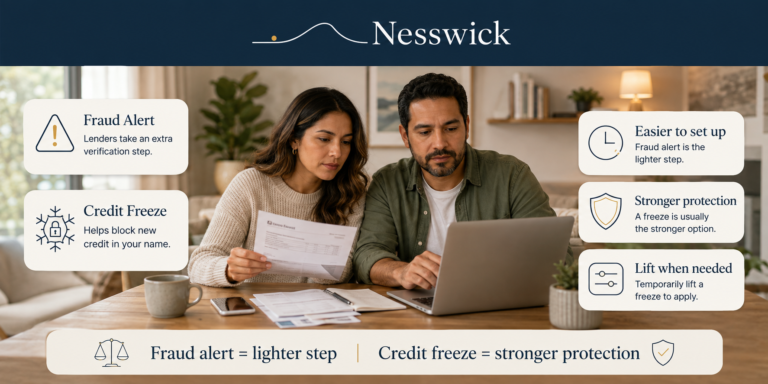
- Place a free fraud alert with one of the three credit bureaus. The bureau you contact is required to tell the other two. A standard fraud alert lasts one year.
- Get your credit reports. All three bureaus have permanently extended free weekly reports at AnnualCreditReport.com. Look for accounts, addresses, inquiries, and collections you do not recognize.
- Save everything. Bills, collection letters, denial notices, IRS letters, screenshots, dates, and the name of every person you spoke to.
A fraud alert and a credit freeze are different tools, and the difference matters here. Our guide on fraud alerts versus credit freezes explains which to use when. Both are free, and neither requires buying a monitoring service.
The FTC Identity Theft Report Is the Document That Matters Most
IdentityTheft.gov is the FTC’s free reporting site for identity theft victims. You answer questions about what happened, and it produces two things: an FTC Identity Theft Report, sometimes called the ID theft affidavit, and a personal recovery plan with the specific steps for your situation. If you create an account, it saves your progress and pre-fills letters and forms for you.
According to the FTC’s own recovery guidance, an Identity Theft Report is what unlocks several rights:
- Blocking fraudulent information. An FTC Identity Theft Report can support a request to block fraudulent information from your credit report. The bureaus may also require proof of identity and identification of the specific fraudulent items, so follow the current bureau and FTC instructions for the request.
- An extended fraud alert. An extended alert lasts seven years, compared with one year for an initial alert. The FTC notes it is for people who have experienced identity theft and completed an FTC Identity Theft Report or a police report.
- Free credit reports in connection with that extended alert, with instructions provided in the confirmation letter from each bureau.
- Stronger disputes. It gives you one consistent document to send to lenders, debt collectors, landlords, and screening companies.
This is the practical reason to do the FTC report first. Many of the things people hope a police report will accomplish are actually tied to the FTC Identity Theft Report.
When You Actually Need an Identity Theft Police Report
Current FTC guidance does not treat a local police report as the universal first step in every identity theft case. It becomes especially useful when you have information about a suspect, when a company specifically asks for one, or when a particular recovery or records request requires additional law-enforcement documentation.
That gives you a practical test.
You probably do not need one if:
- The only issue is an unauthorized charge on an existing card number, and the issuer is already handling the dispute.
- The problem is contained to one account and the company accepted your FTC report.
You should file one if:
- A new account, loan, lease, utility, mobile line, job record, or government benefit appeared in your name.
- A company, debt collector, bank, landlord, or agency says it will not proceed without a police report.
- You know or strongly suspect who did it. This is common when the person had access to your home, mail, or documents.
- The theft involves stolen mail, a stolen wallet, a break-in, a forged check, a vehicle, or a criminal charge in your name.
- The same person has done it more than once.
A police report will not, on its own, restore your credit or reverse charges. Its value is as evidence and as a trigger for an investigation when there is something to investigate.
How to File a Police Report for Identity Theft, Step by Step
1. Create your FTC report first
Go to IdentityTheft.gov and complete the report before you contact police. It takes roughly fifteen minutes and gives the officer a clear, structured summary of what happened. Print it or save it as a PDF.
2. Call the non-emergency line, not 911
Ask how your department takes identity theft reports. Some take them in person, some online, some by appointment, and some will take an informational report even if no investigation follows. Ask this before you drive anywhere.
3. Say what you need in one sentence
“Someone used my personal information to open accounts in my name, and I need to file an identity theft report.” That framing avoids a long back-and-forth about whether the matter belongs to police.
4. Bring the right documents
- Your FTC Identity Theft Report from IdentityTheft.gov, printed or on a phone
- A government-issued photo ID
- Proof of your address, such as a utility bill, lease, mortgage statement, or bank statement
- Evidence of the theft: fraudulent bills, collection letters, statements showing bank account numbers you do not recognize, denial letters, IRS notices, marked-up credit report pages, emails, texts, or shipping notices
- A written list of the fraudulent accounts or transactions, with dates, amounts, company names, and account numbers where you have them
- Any suspect information you have, including names, addresses, phone numbers, emails, delivery addresses, or a relationship to you
- A short timeline: when you noticed, who you called, and what each company said
5. Keep it factual
You do not need to prove the case at the counter. You need a clear record of what happened. Stick to dates, amounts, and account names.
6. Get the report number before you leave
Ask for the report or incident number, the officer’s name or badge number, and how to obtain a copy. Some departments hand you a printout. Many give you only an incident number and require a later request through a records unit or online portal.
Useful questions to ask while you are still there:
- When will the full report be available?
- Do I request it from the records unit, the officer, or online?
- Is there a fee for a certified copy?
- Can it be sent by email or mail?
- What ID do I need to bring when I request it?
When you get the copy, save it in more than one place, send copies rather than your only original, and keep a log of what you sent, to whom, and when.
If the Police Will Not Take a Report
This happens, and it is not a dead end.
- Ask for an informational or incident report instead of a criminal complaint. Departments that will not investigate will often still document.
- Ask for a supervisor or speak with the records desk directly.
- Try the jurisdiction where the crime happened, not just where you live. If goods were shipped to an address in another city, that department may have more reason to take it.
- Ask for something in writing showing you attempted to report, even a call log reference number.
- Go back to the company that asked for it and tell them police declined. Ask whether they will accept the FTC Identity Theft Report instead. Many will.
- File a complaint with the CFPB at consumerfinance.gov/complaint if a credit bureau, lender, or debt collector refuses to follow identity theft dispute procedures. The CFPB accepts complaints about credit reporting and debt collection, and companies generally respond within fifteen days.
The goal is not to win an argument with the front desk. It is to document that you tried and keep the recovery moving.
If the Victim Is a Child
Child identity theft usually surfaces indirectly: a bill, a collections notice, an IRS letter, or a denied benefit in a child’s name. Children rarely have credit files, so any file at all is worth investigating.
The FTC’s guidance is to contact the companies where the fraud occurred, ask the credit bureaus to remove fraudulent accounts, request a free credit freeze, and report it at IdentityTheft.gov. A credit freeze is free for children under 16, and 16- and 17-year-olds can request and lift their own.
Expect the bureaus to ask for more documentation than they would for an adult: your ID, proof of address, the child’s birth certificate, and the child’s Social Security card. If you are not the parent, you will also need guardianship paperwork.
If It Involves Taxes
Tax identity theft is handled through the IRS as well as the FTC, and it has its own rules.
The IRS tells victims to follow the instructions in any IRS letter they received, report the theft, follow the recovery steps at IdentityTheft.gov, get an Identity Protection PIN, keep records of everything, and keep filing and paying taxes normally while the issue is worked out. It also suggests contacting your state tax agency.
Form 14039, the Identity Theft Affidavit, is not always needed. The IRS says to file it if the IRS instructs you to, if you cannot use the Identity and Tax Return Verification Service, or if you are reporting tax-related identity theft you have not reported before. If you received a letter such as 5071C, 4883C, or 5747C, follow the instructions in that letter instead.
A police report is rarely the IRS’s first ask here. Focus on the IRS letter, your FTC report, and the forms the IRS names.
Keep One Recovery File
Identity theft recovery is mostly administration, and it goes faster when everything is in one folder.
Keep: the FTC Identity Theft Report and recovery plan, the police report or incident number, copies of the ID and address proof you used for disputes, the fraudulent account list, marked-up credit report pages, every letter you sent, delivery or upload confirmations, and written confirmations that accounts were closed or blocked.
Add a running call log with the date, the company, the person’s name, and what they said would happen next. When a dispute stalls three months later, that log is what gets it moving again.
Frequently Asked Questions
Do I need a police report to fix my credit?
Not always. An FTC Identity Theft Report is central to many identity-theft disputes and blocking requests, but additional documentation may be required depending on the request. A police report is particularly useful when a company asks for one, when you know or suspect who committed the theft, or when another recovery step specifically requires it.
How much does it cost to file?
Nothing to file. Some departments charge a small fee for a certified copy of the report.
Can I file an identity theft police report online?
It depends entirely on the department. Some offer online reporting for non-violent property crimes including identity theft, some require an appointment, and some require you to appear in person. Call the non-emergency line first.
Will the police investigate?
Sometimes. Investigations are far more likely when there is a local suspect, a delivery address, a forged document, or a pattern affecting several people. If your case is a data-breach-driven account opening with no local trace, expect documentation rather than an investigation, and treat the report as evidence rather than as the solution.
Should I file in the city where I live or where the fraud happened?
Start where you live. If they decline and you know where the crime occurred, try that jurisdiction too.
How long do I have to report identity theft?
There is no single deadline, but report as soon as you notice. Some dispute rights and billing-error protections have their own time limits, and evidence gets harder to gather as time passes.
Bottom Line
Start free, and start with the FTC. IdentityTheft.gov gives you the report that supports disputes and blocking requests with credit bureaus and businesses, plus a recovery plan tailored to your situation. Add a police report when there is a suspect, a specific company requirement, or facts worth investigating.
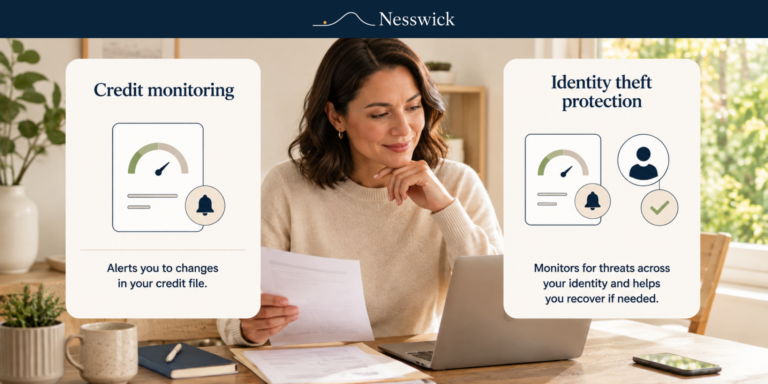
No paid service can undo identity theft for you, and none can guarantee it will not happen again. What actually resolves these cases is documentation, persistence, and knowing which piece of paper does which job.

Affiliate Disclosure
Nesswick may earn a commission from some links on our site. This article contains no affiliate links, and nothing here depends on a purchase.
Sources and Methodology
This guide is research-based. It draws on current published guidance from the Federal Trade Commission, IdentityTheft.gov, the Internal Revenue Service, and the Consumer Financial Protection Bureau. We did not test any product for this article and did not reproduce third-party reviews.
Because identity theft reporting procedures vary by police department, we describe what is consistent nationally, based on federal guidance, and flag where local practice differs. Specific rights, durations, and document requirements come from the agency sources listed below rather than from secondary coverage. Where a widely repeated online claim conflicted with agency guidance, we followed the agency. In particular, the common advice that a police report is the required first step does not match current FTC guidance, which treats it as situational.
Sources Referenced
- Federal Trade Commission, Identity Theft: A Recovery Plan
- Federal Trade Commission, IdentityTheft.gov
- Federal Trade Commission, What To Know About Identity Theft
- Federal Trade Commission, How To Protect Your Child From Identity Theft
- Federal Trade Commission, Free Credit Reports
- Internal Revenue Service, Identity Theft Guide for Individuals
- Internal Revenue Service, When to File an Identity Theft Affidavit (Form 14039)
- Consumer Financial Protection Bureau, Submit a Complaint
- AnnualCreditReport.com
Last reviewed: August 2026.