
Data Removal helps families reduce how easily strangers can find personal details online. People-search sites and data brokers often publish home addresses, phone numbers, relatives, and even property records, pulled together from public records and quietly sold or displayed for anyone to browse. This matters because it can fuel stalking, harassment, robocalls, and identity fraud. Removing your information isn’t a one-time task; brokers regularly re-scrape public records, so listings can reappear months later. Nesswick’s data removal guidance focuses on realistic expectations: what you can remove yourself for free, when a paid removal service might save you time, and why ongoing monitoring matters more than a single cleanup.
Start with the free steps
- Search your name on major people-search sites to see what’s currently listed.
- Use each site’s own opt-out or removal request form, even if it’s hard to find.
- Set up a free alert for your name to catch new listings early.
- Ask family members to check their own listings too, since shared addresses often link back to you.
- Keep a simple log of where you’ve submitted removal requests, since some sites ask you to reconfirm periodically.
Latest Data Removal Guides
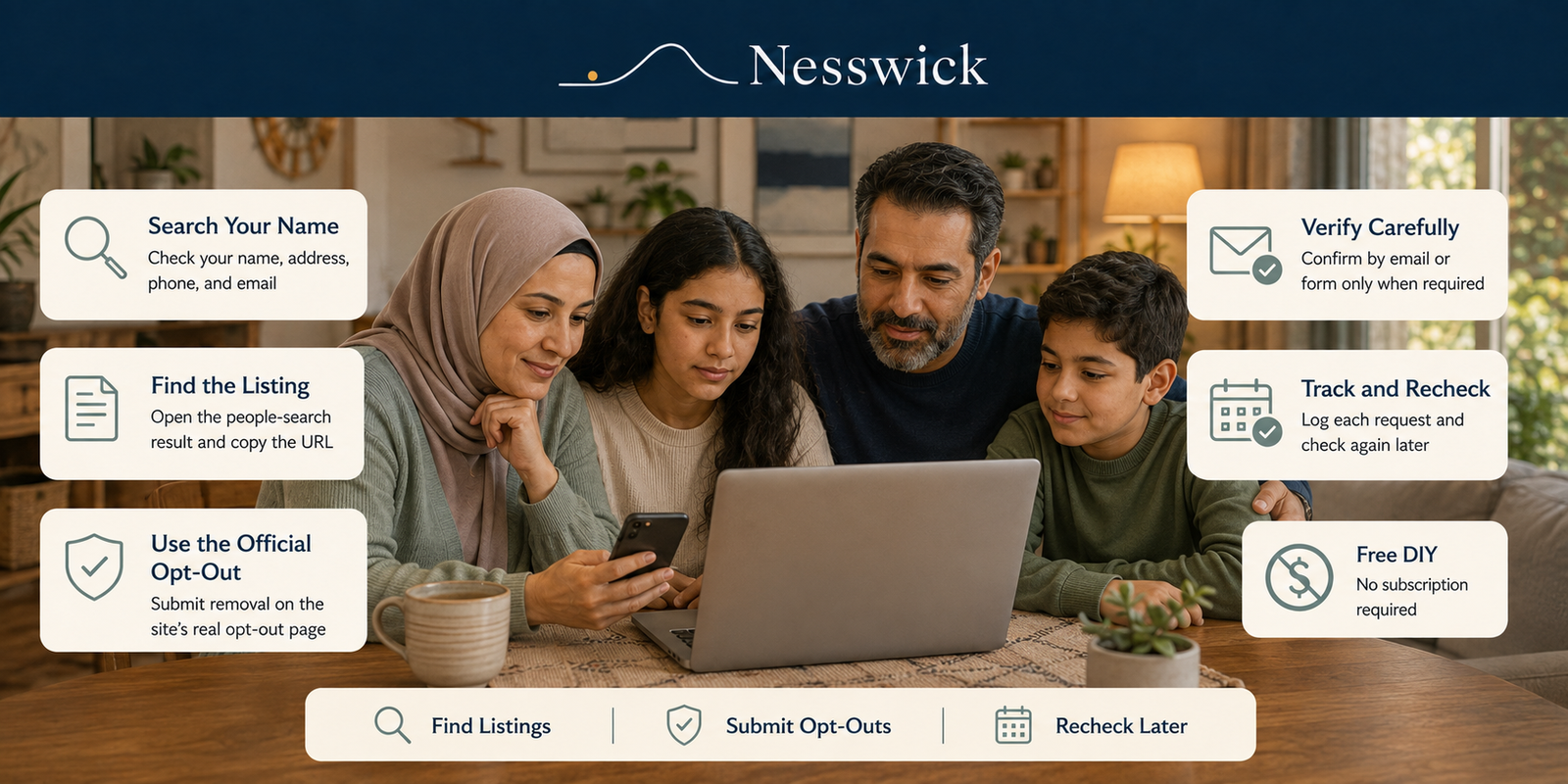
How to Remove Yourself From People Search Sites for Free
Read Guide →: How to Remove Yourself From People Search Sites for FreeMost people search sites let you opt out for free. Here is the full DIY method, the tracking list that…
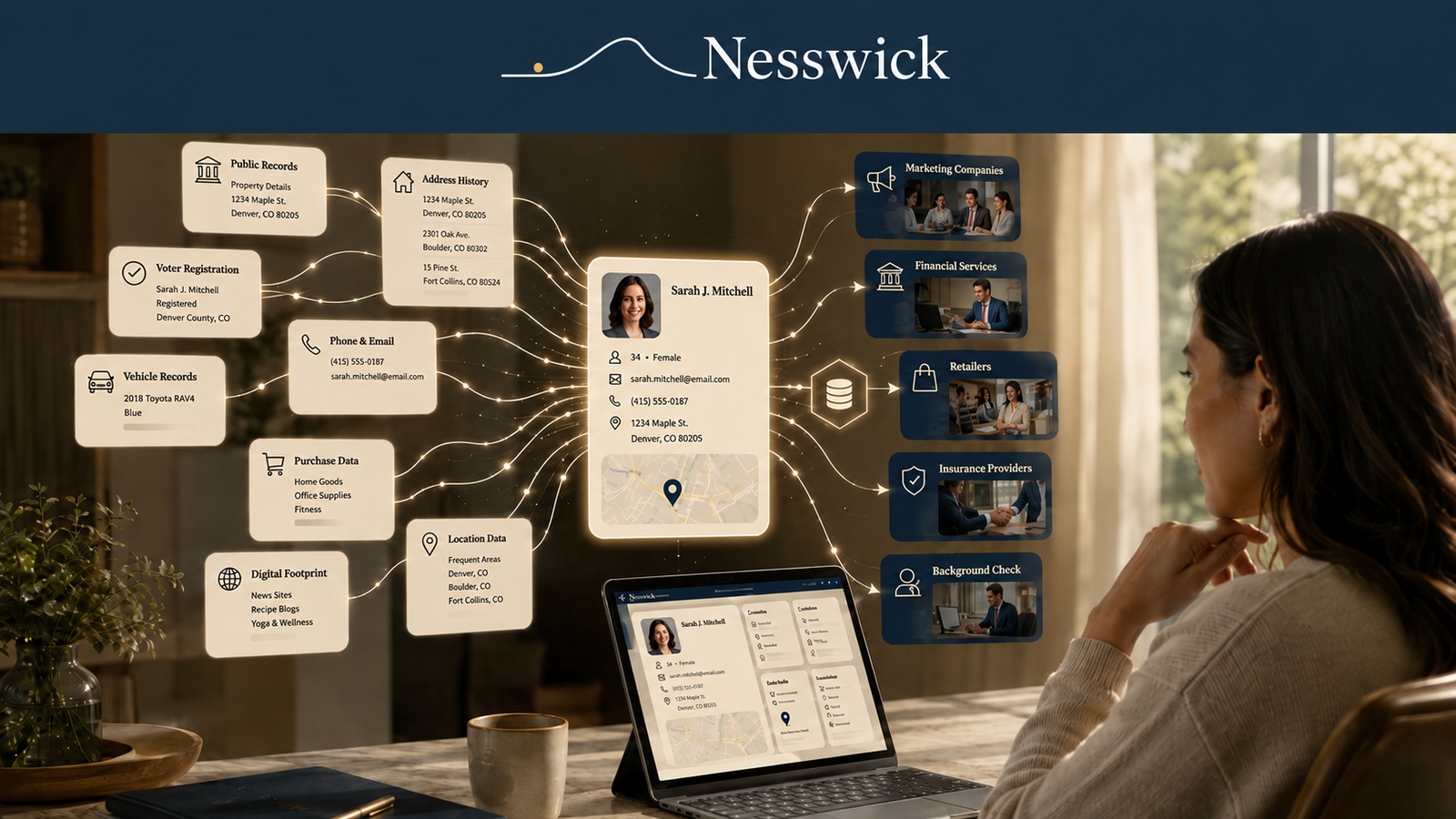
How Data Brokers Collect and Sell Your Information
Read Guide →: How Data Brokers Collect and Sell Your InformationMost people meet data brokers the same unsettling way. They search their own name, and there it is: their age,…

Best Data-Removal Services for Families
Read Guide →: Best Data-Removal Services for FamiliesDeleteMe, Optery, and Incogni each handle family coverage differently. Here’s what their current official plans actually offer, what independent testing…

Data Removal Service vs. DIY: Is It Worth Paying?
Read Guide →: Data Removal Service vs. DIY: Is It Worth Paying?A paid data-removal service and doing it yourself both reduce your exposure on data broker sites, but they cost different…

How Long Data Removal Takes and Why Information Comes Back
Read Guide →: How Long Data Removal Takes and Why Information Comes BackFew things are as deflating as spending an afternoon removing yourself from people-search sites, only to search your name months…
What this section helps with
- Reduce the amount of personal information strangers can find with a simple search.
- Lower the risk of unwanted contact, harassment, or stalking tied to public listings.
- Understand which data brokers are most relevant to your situation.
- Decide whether a paid removal service is worth it for your household.
- Build a routine for checking and re-removing listings over time.
Tools we may cover
This category may cover people-search opt-out guides, data broker directories, and subscription-based removal services that submit and track opt-out requests on your behalf. We describe what these tools generally do and how they differ, without ranking or promoting a specific provider here.
What these tools cannot guarantee
No removal service can guarantee your information will never reappear. Data brokers regularly collect new public records, and some sites are slow to honor opt-out requests or resurface old listings. Removal reduces exposure; it does not permanently erase your digital footprint.
How Nesswick evaluates this category
Our assessments of data removal services follow the same evidence-based approach described in How We Test and Editorial Policy.
Nesswick Products for Data Removal
Nesswick currently reviews the following data removal services:

Not sure where to begin? Start Here.