
How to Remove Your Home Address From the Internet
Your address is the detail that feels most exposing, and it is the one people have the least luck removing. Not because the removal steps are hard (most take minutes), but because almost every guide only deals with the top layer.
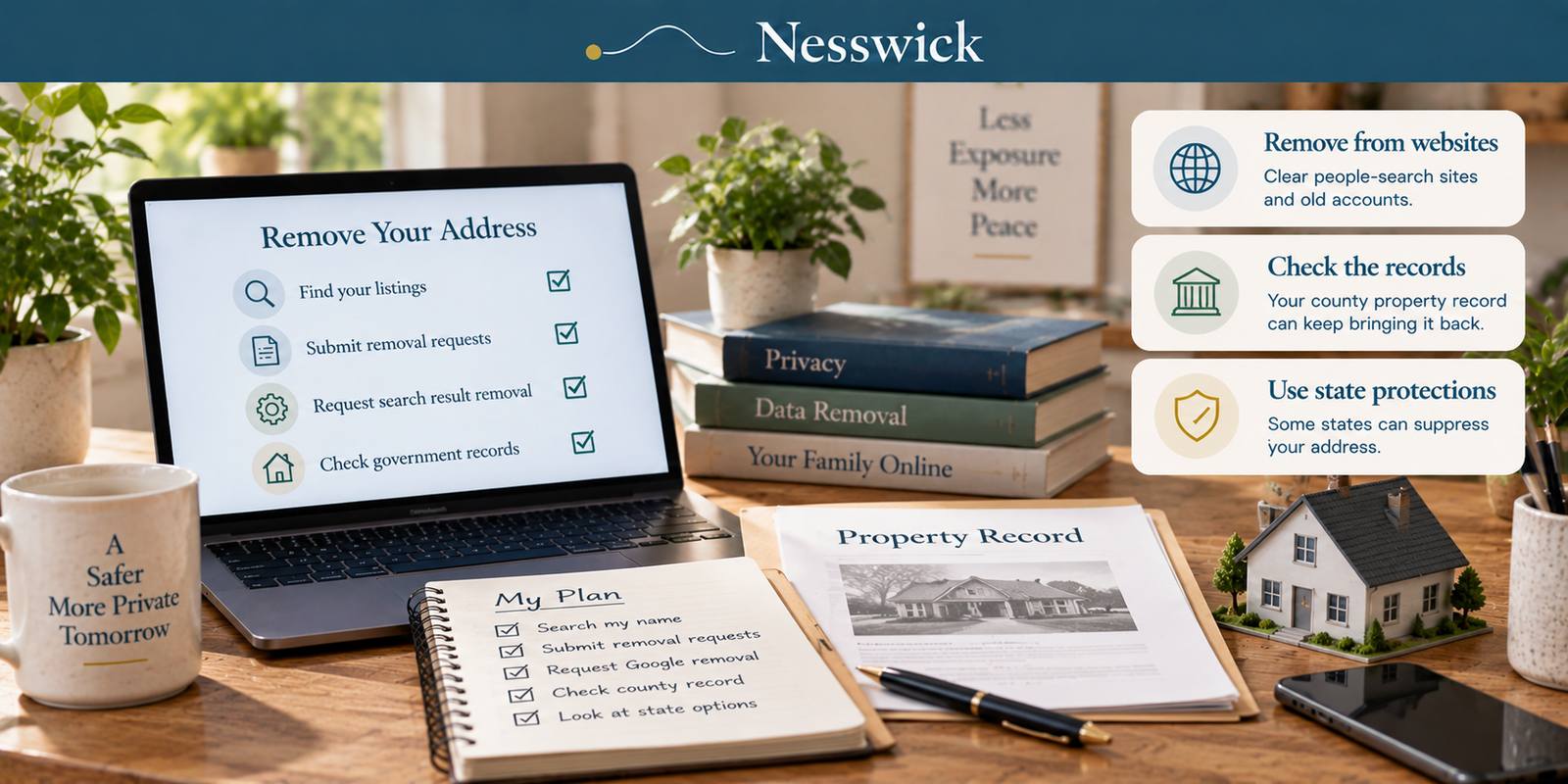
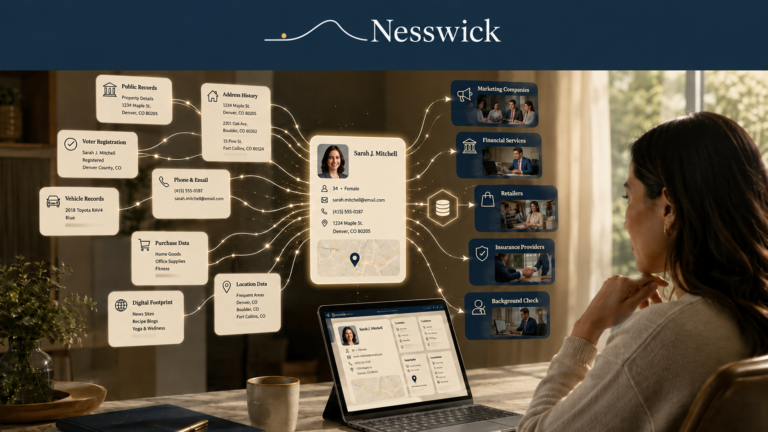
Here is the honest shape of it. Your address sits in two places at once: on websites, where you can usually get it taken down, and in government records, where you usually cannot. The websites keep re-copying the records. That is why the listings you cleared in spring are back by autumn.
So this guide does both layers. The first half is quick. The second half is the one nobody writes, and for some readers it is the only half that matters.
If you are dealing with a stalker, an abusive ex-partner or ongoing harassment, skip ahead to “the record underneath”. There are specific programmes for you, and they work differently from anything in the first half.
Layer one: the websites
This is the part every guide covers, so we will be brief.
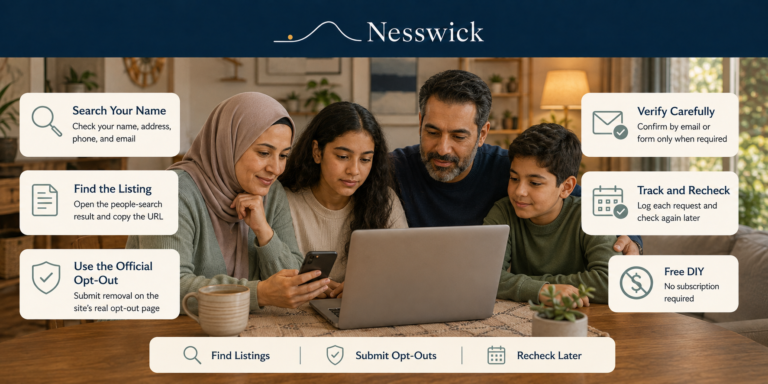
People-search sites first. They are the loudest source and the fastest win. Search your name with your city in quotation marks, list every site where your address appears, and work through them: the method is the same everywhere and it is set out in How to Remove Yourself From People Search Sites for Free.
Californians have a shortcut: one request through the state’s Delete Request platform reaches every registered data broker, and a broker that matches you can be required to delete what it holds about you. Worth doing before the individual opt-outs. Then ask Google to drop the results. Google publishes a list under the heading “What kind of information can you ask to be removed”, and the first item is “Your address, phone number, or email”: no threat or harassment test attached, which is worth knowing because guides are vague about it. Google runs a separate, stricter process for doxxing, but you do not need to meet that bar to ask about a published address.
Use the Results about you tool at myactivity.google.com/results-about-you, which lets you “find out if your personal info, like your home address, phone number, or email address shows up in search results.” You submit, Google reviews, you track the status. Two caveats from Google itself: the feature is “currently rolling out for users who are over the age of 18 in certain markets”, so you may not see it, and, far more importantly, “Google can only remove things from Google Search results.” The page hosting your address stays exactly where it is.
That is why the order matters. Clear the source site first, then the search result. Reverse it and you have hidden a page that is still live.
Then your own accounts. Old shopping profiles, delivery apps, dormant sign-ups. Search your inbox for “order confirmation” and “welcome to” to find the ones you have forgotten. Update the address, or delete the account outright rather than leaving it sitting there.
And your own posts. Not social media in general, specifically the things that give away where you live. A photo where the house number is legible. A post naming your street. A public event invitation with the address in it.
Layer two: the record underneath
Here is what the listicles leave out.
When you bought or sold your home, a deed was recorded. Your county assessor or recorder maintains a property record with your name and the address attached. Depending on where you live, that record is searchable by the public, and it is one of the sources people-search sites harvest.
This is why address removal feels like bailing out a boat. You can clear every listing on the internet and the record that generates them is still sitting in a county database, available to the next company that goes looking.
You usually cannot delete that record. But in specific circumstances, and in specific states, you can have it suppressed. These are government programmes, they are not widely known, and no page on the first page of Google results for this topic mentions them.
Address Confidentiality Programs
Most states run one. In the words of one state’s directory, an ACP is “a state or territory program whose core services include providing a substitute address and mail forwarding services to victims of crime and protected persons.”
In practice: you are issued a legal substitute address. You use it with state and local agencies instead of your real one, and your mail is forwarded to you. Virginia’s description is typical: “Certified program participants are authorized to use a ‘substitute’ mailing address in lieu of their physical home address”, and its forwarding is free, as is Arizona’s, which “forwards to her/his real address at no cost.” Who qualifies varies by state, and is broader than many people assume. Washington’s programme covers “survivors of domestic violence, sexual assault, stalking, or trafficking, and Criminal Justice Affiliates, Election Officials, and Protected Health Care Workers.” Other states draw the line differently.
Two limits you must know before you pin hopes on this.
First, not every state has one. Most do. As of our check, six did not: Alabama, Alaska, North Dakota, South Carolina, South Dakota and Wyoming. Check your own state rather than assuming.
Second, and this is the one that disappoints people, an ACP is not retroactive. New Jersey’s programme states it plainly: “ACP is unable to remove addresses that are already publicly recorded but can protect future exposure.” Virginia says the same: “The Address Confidentiality Program is not retroactive and cannot provide absolute protection.”
So an ACP protects the address you are moving to, not the one you have been living at for nine years. That makes it enormously valuable at the right moment (when you are about to move, or have just moved) and much weaker if you are staying put. If a move is in your future, enrol before you create records at the new address, not after.
To find yours, search for your state’s Secretary of State or Attorney General plus “address confidentiality program”. Applications usually run through a local victim-services organisation rather than directly.
Property-record redaction
Separately from ACPs, many states let certain people restrict public access to their home address in property records. The eligible groups and the process vary enormously: this is the most jurisdiction-specific thing in this article, so treat the examples as illustrations of what to look for, not as instructions.
Texas operates it statewide through a single form. The Comptroller’s form lets an eligible person “restrict public access to their home address information pursuant to Tax Code Section 25.025”, and its list of eligible categories runs to two dozen: judges, peace officers, prosecutors and elected officials, but also family violence survivors, survivors of sexual assault, abuse, stalking or trafficking, and anyone already in the state’s Address Confidentiality Program. You complete it and send it to your appraisal district.
Arizona sets a higher bar. In Maricopa County, redaction “prohibits the general public from accessing your full name, residential address and telephone number”, but it requires an affidavit filed with the presiding judge of the superior court, and the eligible list is occupational: peace officers, judges, commissioners, public defenders, prosecutors, code enforcement officers, along with people holding protective orders.
The pattern is worth understanding even if neither example is your state: one jurisdiction accepts a notarised form, another requires a judge. Start with your county assessor’s or recorder’s website and search for “redaction” or “confidentiality”.
Voter registration
Voter rolls are another public record carrying your address, and several states offer confidential status.
New York offers it to victims of domestic violence: the record “will be kept separate and apart from other registration records for four years and not be made available for inspection or copying by the public.”
California ties it to the ACP: “Certain voters facing life-threatening situations may qualify for confidential voter status if they are active members of the Safe at Home program”, so enrolling in one gets you the other. If you are pursuing an ACP, ask about voter confidentiality in the same conversation. It is frequently handled together and easily missed if you do not raise it.
If this is a safety matter
Everything above reduces exposure. None of it is protection, and no article should pretend otherwise.
If someone is looking for you and means you harm, the online cleanup is worth doing but it is the smallest part of your response. Contact local law enforcement, and contact a domestic violence or stalking advocacy organisation: they know which of your state’s programmes exist, what the eligibility wording actually means in practice, and how to apply without creating a paper trail that defeats the point. Applications for these programmes usually go through them anyway.
Do the ACP question early, especially if a move is anywhere in your plans. It is the one mechanism here that works on the record rather than the copies, and it only works forwards.
Keeping it off
Two habits, and then you are done.
Stop feeding it back in. Think about where you attach a home address to something public: a business listing, a domain registration, a club roster, a professional profile. Substitute a P.O. box or a work address where you can. This is the only step that prevents the problem rather than cleaning it up.
Re-check a few times a year. Search your name and address the way someone looking for you would. Listings come back, because the records underneath are still generating them: that is the machine working as designed, not your opt-out failing. Ten minutes, twice a year, with a calendar reminder so it actually happens.
If keeping up across dozens of sites is more than you will sustain, a removal service automates the submitting and re-checking, and Data Removal Service vs. DIY: Is It Worth Paying? weighs whether that is worth it. Note what it cannot do: no service files an ACP application or a property-record redaction for you. The second half of this article is yours either way.
Four questions about addresses
Can I get my address off the internet completely? No, and be wary of anyone who says otherwise. You can clear the websites, and in some circumstances suppress the government record going forward. Some records will remain publicly available depending on the record type and your state.
Do I have to prove I am being threatened to ask Google? No. Your address is a listed category with no threat test attached. Google reviews each request, but you do not need to demonstrate harassment to make one.
I removed everything and it came back. What went wrong? Probably nothing. The county property record is still there and the sites re-harvest it. That is the argument for the second half of this article rather than repeating the first.
Is an Address Confidentiality Program worth applying for if I am not moving? Less useful, but not useless. It will not remove what is already recorded (programmes say so explicitly), though it protects everything you file from then on. If a move is coming, enrol before it.
Affiliate Disclosure
Current relationship: Nesswick does not currently use affiliate links in this article. Product and service references are included for editorial purposes. This never changes our editorial judgment. We recommend free steps before paid products whenever the free step is the correct first action.
Sources and Methodology
This is an official-documentation guide. No hands-on testing was performed: we did not submit removal requests or enrol in any programme.
Two points of precision.
On Google: home address, phone and email are listed categories with no threat or doxxing condition attached, which we checked specifically because guidance in circulation is vague about it. We have deliberately not written that Google will remove your address: each request is reviewed and the outcome is Google’s.
On the government programmes: these vary enormously by state and, for property records, by county. Every example here is named, sourced to that jurisdiction’s own page, and offered as an illustration of the mechanism rather than as instructions that apply where you live. We do not say every state has an Address Confidentiality Program, because six do not; we do not say ACPs are universally free, because only some publish that; and we state prominently that they are not retroactive, because that is the point on which readers are most likely to be disappointed.
We handle the safety-threat case by naming the mechanisms and then pointing readers to advocacy organisations, which is where these applications are usually made. We do not guarantee complete or permanent removal.
Last reviewed and verified: September 15, 2026.
Sources Referenced
- Google Search Help: “Remove my private info from Google Search”; “Results about you” (support.google.com), verified 15 September 2026
- Minnesota Secretary of State: directory of other states’ address confidentiality programmes
- Virginia Office of the Attorney General; Washington Secretary of State; Arizona Secretary of State; New Jersey Department of Children and Families: their own Address Confidentiality Program pages
- Texas Comptroller Form 50-284 and Texas Tax Code §25.025; Maricopa County Assessor: property-record redaction
- New York State Board of Elections; California Secretary of State Voter Information Guide: confidential voter registration
- California Privacy Protection Agency: DROP regulations §7613
- Whitepages: “Consumer Privacy Rights”, cited for its stated exceptions covering government-sourced records