

How to Freeze Your Credit at All Three Bureaus (and Lift It Again)
A credit freeze is the strongest free step most people can take against identity theft. Doing it properly takes about twenty minutes, and almost every guide will tell you it is a three-part job.
It is really a two-part job, and the second part is the one nobody mentions. Freezing Equifax, Experian and TransUnion blocks most new credit accounts. It does not touch the file a phone company checks, or a utility, or a bank opening a checking account.
So: the three bureaus first, then the ones that matter for the accounts the three do not cover.
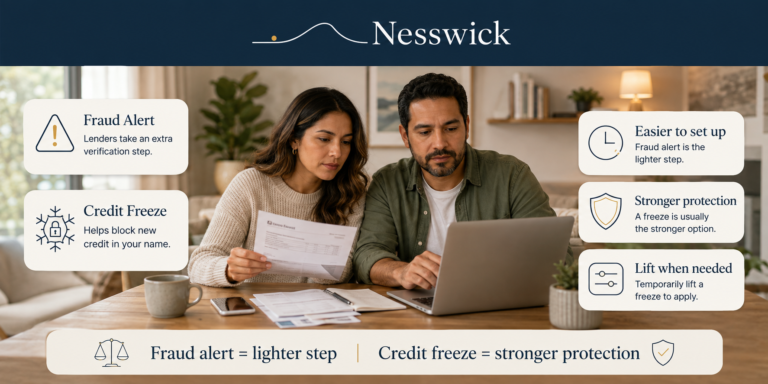
If you are still weighing a freeze against a lighter fraud alert, Fraud Alert vs Credit Freeze: Which One Should You Use? is the page for that decision. This one assumes you have made it.
What a freeze actually does
It restricts access to your credit report, so lenders generally cannot pull it, and since almost every new account needs a credit check, that blocks most new-account fraud. The FTC’s phrasing: while a freeze is in place “nobody can open a new credit account in your name, including you.”
Three things worth having straight:
- It is free at the three nationwide bureaus, to place and to lift. Federal law since 2018.
- It does not affect your credit score. The FTC says so directly, “and it doesn’t affect your credit score”, and the bureaus agree.
- It lasts until you end it. “A credit freeze lasts until you lift it.” One limit, which is our reading rather than an official line: the FTC describes the protection in terms of new accounts. A freeze is a good lock on the front door. It does nothing about accounts a thief already has access to.
Part one: the three, in one sitting
Allow half an hour and have ID nearby. Each bureau verifies you before it freezes anything: expect questions drawn from your credit history, or a one-time code by text.
Go to each bureau’s own site directly. Type the address; do not follow a link from an article, including this one. Anything financial deserves that habit.
Expect an account, not a PIN – mostly. This has changed and most guides have not caught up. Experian now says plainly: “You no longer need a PIN to manage your credit freeze with Experian.” Equifax may text you a one-time PIN, but that is verification for the session, not a code to keep. TransUnion works through an online Service Center account.
What you actually need to preserve is access: the email, password and second factor for each of the three. Add them to your password manager while you are creating them; if you do not have one set up for the household, our walkthrough covers it.
Confirm each before moving on. Bureau three is the one people forget.
How fast it happens. By law, an online or phone request must be actioned within one business day; by post, three. Lifting online or by phone must happen within one hour. In practice the bureaus are quicker than the minimum: TransUnion says changes “typically takes effect almost immediately”, Experian says “in real time”. Equifax publishes no timeframe.
Part two: three is not all of them
Here is the thing the three-bureau advice leaves out.
Equifax, Experian and TransUnion are the three nationwide credit reporting companies. They are not the only companies that hold a file on you and answer questions about you when you apply for something. The CFPB publishes a list of consumer reporting companies covering “the three nationwide consumer reporting companies as well as other companies that focus on certain market areas”, and that list can be filtered to the ones that will freeze your report on request. Twenty companies come back.
We should be precise about what is and is not official here. Neither the FTC nor the CFPB says anywhere that freezing the big three leaves account types unprotected. That conclusion is ours, and we draw it from the plain fact that the CFPB itself lists other companies that report on you, tells consumers to “consider blocking third-party access to your consumer reporting data through a security ‘freeze,'” and identifies which of them honour one.
Which ones are worth your time depends on what you are worried about.
If you are worried about phone, TV or utility accounts – NCTUE. The National Consumer Telecom & Utilities Exchange holds “a record of all telecommunication, pay TV, and utility accounts reported by exchange members.” It offers a freeze and says so: “Place a free security freeze to prevent access to your NCTUE credit report, with some exceptions.” Free, online, by phone or by post via nctue.com. Worth knowing: Equifax is the contracted servicer for the NCTUE database, but the CFPB notes “Equifax is not a member of the NCTUE”: an Equifax freeze and an NCTUE freeze are two separate acts.
If you are worried about a checking account being opened – ChexSystems. It collects and reports data on “checking account applications, openings, and closures.” Per the CFPB, “This company will freeze your consumer report if you request it,” at chexsystems.com, online, by phone or by post. We could not find a fee statement on its pages, so we are not going to tell you it is free.
If you are worried about payday, instalment or rent-to-own credit – Clarity Services. Owned by Experian, but frozen separately; an Experian credit freeze does not cover it. Its coverage per the CFPB: “payday loans, installment loans, auto loans (and leasing), check cashing services, rent-to-own transactions, telecommunication account openings.” Freeze at clarityservices.com. Fee status, again, unstated.
For the widest single catch – LexisNexis Risk Solutions. One freeze here covers two agencies: “Applying a security freeze prohibits LexisNexis Risk Solutions and SageStream from releasing your LexisNexis Consumer Disclosure Report.” LexisNexis states it “does not charge a fee to apply, lift or remove a security freeze,” and it can be done online at consumer.risk.lexisnexis.com/freeze. Best value for the time spent, if you only do one from this section.
And one more, if you are also a landlord’s or employer’s problem: the CFPB’s freeze list includes The Work Number, which handles employment and income verification, and several tenant-screening companies. A rental application is an account type a big-three freeze does not touch at all.
If you want to do this properly, the CFPB’s list is the place to start rather than our summary: it is the only official inventory of who reports on you, and it says which of them will freeze.
One honest caveat on cost. The federal free-freeze guarantee applies to the three nationwide bureaus. Where Innovis, NCTUE, LexisNexis and SageStream say there is no charge, that is their own stated policy, not a statutory entitlement, and for ChexSystems and Clarity we could not establish it either way.
Innovis is worth a line of its own, because you will see it described online as “the fourth credit bureau.” It is not; the CFPB categorises it under supplementary reports, and Innovis does not describe itself that way. It does offer a freeze, free: “There is no charge for the addition, temporary lift, or removal of a Security Freeze”, and it takes five minutes, so add it if you are already in the mood.
Realistically: most people should do the three, then NCTUE and LexisNexis. If you have specific reason to worry about bank accounts or subprime credit, add ChexSystems and Clarity. It is one extra evening, once.
Lifting it again
A freeze is not a lock-out, and this is the part to plan rather than discover at a mortgage appointment.
When a lender needs to pull your report, you lift, or thaw, the freeze first, then re-freeze. Lifting is free. Three things make it painless:
- Lift at one bureau if you can. The FTC’s advice: if you know which bureau your lender uses, “just lift the freeze at that one bureau, and then put the freeze back in place once the need for a credit check passes.” Ask the lender. Most will tell you.
- Lift for a date range. Where a bureau lets you schedule a temporary lift, use it: the freeze restores itself, which removes the step everyone forgets.
- Plan ahead. TransUnion lets you “plan and schedule your freeze removal up to 15 days in advance,” which is genuinely useful before a scheduled application. Leave a day’s margin either way, and remember the one-hour rule covers online and phone requests, not post.
What a freeze still cannot do
It blocks new credit in your name. It does not stop someone using accounts you already have, and, as part two of this article is about, it only reaches the files you have actually frozen.
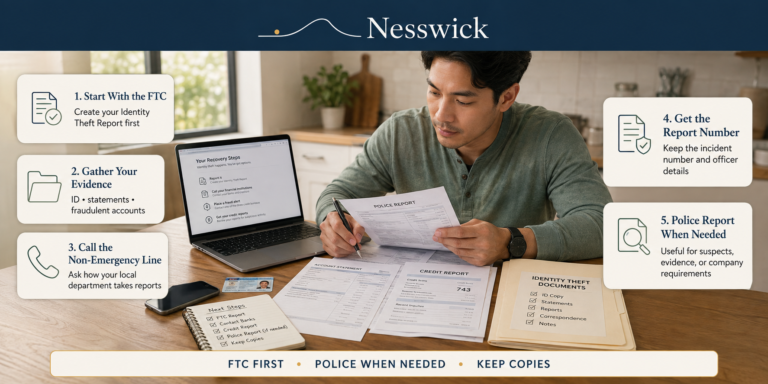
If you are freezing because something has already gone wrong rather than as a precaution, the freeze is one step inside a longer sequence, and the order of the rest matters.
If you have children, their credit can be frozen too, and it is free, but the process is different enough to need its own session and its own paperwork.
What people ask after freezing
Will it hurt my credit score?
No. The FTC states plainly that a freeze “doesn’t affect your credit score,” and the bureaus say the same. This is the most common worry and the answer is genuinely simple.
Do I still need to keep a freeze PIN somewhere?
Not at Experian, which has dropped PINs. Equifax’s PIN is a one-time code for verifying you in the moment. What you need to keep is your login for each bureau.
How quickly can I unfreeze if a lender needs to check?
Within one hour for an online or phone request, by law. Post takes up to three business days. TransUnion also lets you schedule a lift up to 15 days ahead.
Do I really need to freeze more than three places?
It depends what you are protecting. If you only care about credit cards and loans, the three are most of it. If a phone account, a utility or a checking account opened in your name would be a problem, then no: the three do not cover those, and NCTUE, ChexSystems and Clarity are where those applications get checked.
Affiliate Disclosure
A credit freeze is free by law at all three nationwide bureaus. Nesswick earns nothing from the steps on this page. Current relationship: Nesswick does not currently use affiliate links in this article. Product and service references are included for editorial purposes.
Sources and Methodology
This is an official-documentation guide. No hands-on testing was performed. Nesswick did not place freezes to write it. The statutory position comes from the FTC and USA.gov; each company’s process comes from that company’s own current page or from the CFPB’s published record of it.
Two things we want to be explicit about.
First, the central argument of part two, that freezing the three nationwide bureaus leaves some account types unprotected, is our conclusion, not a government statement. We checked: neither the FTC nor the CFPB says it in words. What the CFPB does do is publish a list of consumer reporting companies beyond the big three, tell consumers to consider freezing their consumer reporting data, and identify which companies honour a freeze. We have drawn the obvious inference and labelled it as ours.
Second, on cost: the federal free-freeze guarantee applies to the nationwide bureaus. Where a specialty agency says there is no charge, we quote that agency, and where we could not establish it – ChexSystems and Clarity – we say nothing rather than assume.
The observation that a freeze does not cover accounts a thief already controls remains our reading of the FTC’s wording about new accounts.
Company URLs, phone numbers and PIN policies change, and the CFPB’s list is republished annually. Verify before acting. General information for US readers, not financial advice. A freeze does not prevent all fraud.
Last reviewed and verified: September 8, 2026.
Sources Referenced
- Federal Trade Commission – “Credit Freezes and Fraud Alerts” (consumer.ftc.gov), verified 8 September 2026
- Federal Trade Commission – 2018 press release on the federal law making freezes free
- USA.gov – “Credit freeze”
- Consumer Financial Protection Bureau – list of consumer reporting companies, its “Freeze your report” filter, and its per-company pages for NCTUE, ChexSystems, Clarity Services, SageStream and Innovis (consumerfinance.gov)
- TransUnion, Equifax and Experian – their own credit freeze pages
- Innovis – security freeze page
- NCTUE – consumer page
- ChexSystems – security freeze page
- LexisNexis Risk Solutions – consumer security freeze page
- SageStream – security freeze page
- Clarity Services – security freeze page