

LifeLock Review: What It Costs and What the Coverage Adds
Most people searching for LifeLock are not looking for a feature tour. They want to know what it costs, what the coverage actually includes, and whether it is worth the money. This review is built around those three questions in that order.
The short version: LifeLock sells three standalone plans and two Norton bundles, and the two are priced on different logic. The three standalone plans currently list the same annual amount at renewal as the amount charged today, with a cheaper annual rate set against a more expensive month-by-month option. The Norton bundles work the other way round: they advertise a discounted first year and step up sharply after it. Establishing which of those two structures you are buying into is the single most useful thing to do before signing up.
Nesswick has not purchased or operated a LifeLock account. Every price, tier and limit quoted here came off LifeLock’s own current product pages and Norton’s published renewal price list, on the date recorded under Sources and Methodology.
What the plans cost
| Plan | Annual price | Current annual renewal | Monthly billing option |
|---|---|---|---|
| LifeLock Core | $124.99 | $124.99/yr | $12.49/mo |
| LifeLock Advanced | $199.99 | $199.99/yr | $19.99/mo |
| LifeLock Total | $349.99 | $349.99/yr | $34.99/mo |
And what each of those plans covers:
| Plan | Credit monitoring | Stolen funds reimbursement | Total reimbursement |
|---|---|---|---|
| LifeLock Core | 2 bureaus | up to $25,000 | up to $1.05M |
| LifeLock Advanced | 3 bureaus | up to $100,000 | up to $1.2M |
| LifeLock Total | 3 bureaus | up to $1,000,000 | up to $3M |
The bundled Norton products are priced on a different structure:
| Bundle | First year | Renews at | Credit monitoring | Stolen funds | Devices |
|---|---|---|---|---|---|
| Norton 360 with LifeLock Select | $99.99 | $159.99/yr | 1 bureau | up to $25,000 | 5 |
| Norton 360 with LifeLock Ultimate Plus | $299.99 | $364.99/yr | 3 bureaus | up to $1,000,000 | Unlimited |
Annual versus monthly pricing
Each standalone plan offers two ways to pay, and the gap between them is easy to mistake for a renewal increase.
Core is $124.99 charged annually, or $12.49 a month billed month by month. Advanced is $199.99 annually or $19.99 monthly. Total is $349.99 annually or $34.99 monthly. Paying monthly costs roughly 16 per cent more across a year in every case: $149.88 against $124.99 on Core, $239.88 against $199.99 on Advanced, and $419.88 against $349.99 on Total.
That is a billing-frequency difference, not a year-two increase. On Norton’s own published renewal price list, the annual renewal figures for the three standalone plans are $124.99, $199.99 and $349.99, the same amounts charged at the outset. A buyer on the annual plan is not currently facing a step up twelve months in.
The Norton bundles are the exception and should be evaluated separately. Norton 360 with LifeLock Select is $99.99 for the first year and renews at $159.99, which is 60 per cent more in year two, on the entry-level product most likely to attract a price-sensitive buyer. Ultimate Plus rises from $299.99 to $364.99, about 22 per cent. Those are genuine introductory prices followed by genuine step-ups, and they are the only renewal increases in the range.
One caution on all of it: these prices are dynamic. LifeLock currently labels annual billing with a discount percentage, and promotional percentages come and go. Confirm the current figure on the provider’s own page before subscribing, and check the renewal price list separately, because the two are published in different places.
Our guide to what identity-theft protection actually costs sets LifeLock alongside other providers.
What the bureau count changes
LifeLock Core monitors two credit bureaus. Advanced and Total monitor three. The Norton 360 with LifeLock Select bundle monitors one, which makes it the thinnest credit-monitoring option in the range despite sitting alongside a full antivirus product.
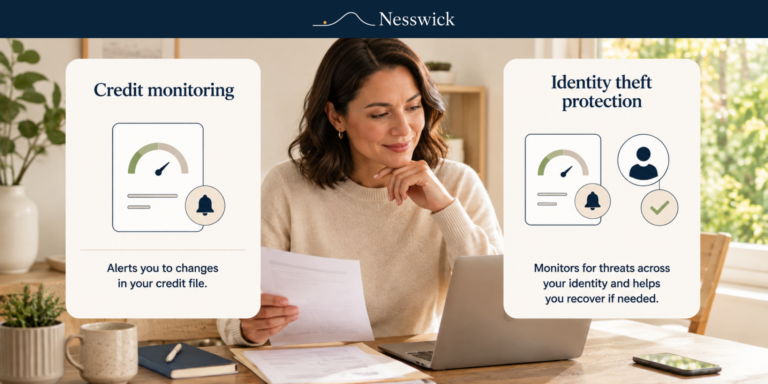
One distinction is worth drawing before going further. Credit monitoring and credit report and score access are separate lines on LifeLock’s comparison grid, each with its own bureau counts and refresh frequencies. The monitoring line is the one that determines which files are watched for new activity. Read the two rows separately rather than treating any three-bureau figure on the page as three-bureau monitoring.
Why the count matters at all: reporting is not uniform across the three bureaus, so a fraudulent account can appear in one file and be absent from another, and monitoring only ever sees the files it is pointed at. Moving from two bureaus to three closes the remaining unwatched file. That is a narrower gap than a one-bureau plan leaves, but it is still a gap, and on Core it is one whole file you are not watching.
Whether closing it justifies the step up depends on what you want monitoring to do. If you have already frozen your credit at all three bureaus, which is free, new accounts are blocked at the source and monitoring is a second line rather than the first. If you have not, the unwatched file is the thing to weigh. We cover the mechanics in what three-bureau credit monitoring means, and which plans actually include it.
Core to Advanced is $75 a year at current annual prices, $124.99 against $199.99. For that difference you get three-bureau monitoring instead of two, a stolen funds reimbursement limit of up to $100,000 instead of up to $25,000, a total identity-theft reimbursement limit of up to $1.2 million instead of up to $1.05 million, scam reimbursement and scam support, which Core does not include at all, activity alerts across five accounts instead of two, and priority phone support. The full comparison grid carries further line-by-line differences worth reading before deciding.
What the reimbursement figures mean, and what they do not
The large numbers attached to each plan are insurance and reimbursement limits, not a promise of payment. Two separate figures are quoted: a stolen funds reimbursement limit, running from $25,000 on Core to $1 million on Total, and an overall identity-theft reimbursement figure, from $1.05 million to $3 million.
These are ceilings on categories of loss, subject to the terms, conditions and exclusions of the underlying policy. They are not a bank balance and they are not a guarantee. What is actually reimbursed depends on the loss type, the documentation, the policy’s exclusions and its eligibility conditions. Anyone weighing these figures should read the policy summary rather than the marketing number, because the gap between the headline and the covered event is where the disappointment lives.
The same caution applies to restoration support. LifeLock offers assistance with recovery. Nesswick has not used it and makes no claim about how well it works.
The Norton bundle question
If you already pay for antivirus and a VPN, the Norton bundles can be reasonable value, because you are buying two things you were buying anyway. Ultimate Plus at $299.99 in year one includes three-bureau monitoring, the $1 million stolen funds limit and device security for unlimited devices, which is a lot of product for the money in the first year.
If you do not want or need Norton’s device software, the bundle is a way of paying for it regardless. And the Select bundle’s renewal step, from $99.99 to $159.99, is the sharpest in the range. Buy the bundle for what it costs in year two, or do not buy it.
What LifeLock cannot do
No identity-protection product prevents identity theft. Monitoring is detection: it tells you something has happened, usually after it has happened. That is genuinely useful, because the cost of identity fraud is largely a function of how long it runs undetected. It is not the same as prevention, and language that blurs the two should be treated with suspicion wherever it appears.
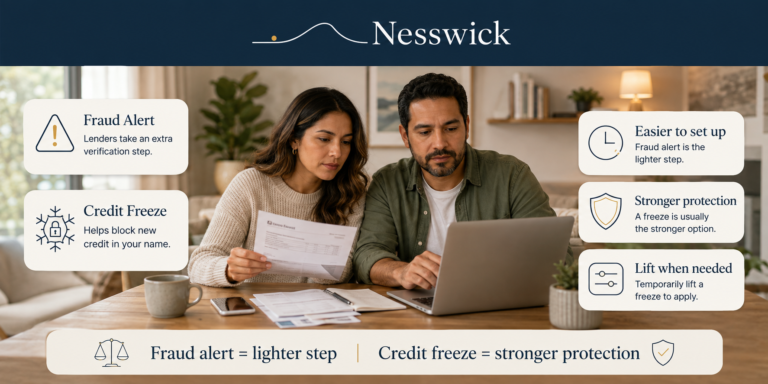
There is also a free layer sitting underneath any subscription, and it does the one thing monitoring does not: a freeze at each of the three bureaus blocks new credit accounts outright rather than reporting them afterwards, and it costs nothing. Fraud alert vs credit freeze covers how each works and when to use which.
We set the free steps against the paid ones in is identity-theft protection worth it.
The regulatory record, stated plainly
LifeLock has a documented enforcement history with the Federal Trade Commission, and any honest review has to mention it without turning it into a scare story.
In March 2010, LifeLock agreed to pay $12 million to settle FTC and state charges that its identity-theft-prevention and data-security claims were false. Among the claims at issue were that the service protected against identity theft “Guaranteed”, and that all stored personal data was electronically encrypted, which the FTC said was not the case.
In December 2015, LifeLock agreed to pay $100 million to settle FTC contempt charges for violating the 2010 order. The FTC alleged that between October 2012 and March 2014 the company failed to maintain a comprehensive information security programme, that it falsely advertised protecting data with the same safeguards used by financial institutions, and that between January 2012 and December 2014 it falsely advertised sending alerts as soon as it received indication of identity theft.
Two things follow, and only two. The first is historical: these actions concerned advertising claims and internal security practice a decade or more ago, and they are not a statement about the product sold today. The second is practical: the specific claims the FTC challenged were prevention claims and alert-speed claims. Those are exactly the two categories a buyer should still read carefully in any identity-protection marketing, from any provider. The record is useful as a reading instruction, not as a verdict.
Who it fits
LifeLock Advanced or Total makes reasonable sense if you want three-bureau monitoring bundled with recovery support in a single subscription, you are comfortable with the annual figure as a recurring cost rather than a first-year rate, and you have already put the free credit freeze in place underneath it. The Norton bundles make sense if you were going to buy Norton anyway and the year-two figure still works.
Who should not pay
Do not buy Core expecting three-bureau monitoring, because it covers two. Do not buy any of it as a substitute for a credit freeze, because the freeze is free and does something monitoring cannot. Do not buy on the strength of the reimbursement headline without reading what the policy actually covers. And if you are buying one of the Norton bundles, do not commit on the first-year price without checking what it becomes twelve months later, which on Select is 60 per cent more.
And if the freeze is already in place, your weekly reports are being read, and nothing about your circumstances is out of the ordinary, the honest answer is that you may not need to pay anyone for this at all.

Affiliate Disclosure
Current relationship: Nesswick does not currently use affiliate links in this article. Product and service references are included for editorial purposes.
Sources and Methodology
This review was prepared without purchasing, operating or testing a LifeLock or Norton account. No hands-on testing was performed. Every plan name, price, bureau count and reimbursement limit was read directly from LifeLock’s own current product pages and from Norton’s published subscription renewal price list on the review date below.
Annual billing and monthly billing were recorded as separate figures and are reported separately, because the difference between them is a billing-frequency difference and not a renewal increase. Current annual renewal amounts for the standalone plans were checked against the published renewal price list rather than inferred from the product page. Credit-monitoring bureau counts were re-verified per plan and are reported distinctly from credit report and score access, which LifeLock lists as a separate feature with its own bureau figures. Introductory and renewal prices for the two Norton bundles were checked separately from the standalone plans, because the bundles are the only products in the range that currently carry a renewal step. Reimbursement limits were re-verified at every tier.
Reimbursement and insurance figures are stated limits subject to the terms, conditions and exclusions of the underlying policy, and are reported here as limits rather than as amounts anyone is guaranteed to receive. The Federal Trade Commission actions described are taken from the FTC’s own published press releases and are reported as historical regulatory record, not as a statement about the product currently sold. Free-protection details come from the FTC’s consumer guidance.
Promotional discount percentages displayed by the provider are treated as temporary and are not reported as standing prices. Pricing changes over time, so confirm current figures on the provider’s own site before subscribing. Nesswick makes no claim about alert speed, support quality or restoration outcomes, none of which we have observed.
Last reviewed and verified: September 19, 2026.
Sources Referenced
- LifeLock: official plans and pricing, verified 19 September 2026
- Norton: Subscription Renewal Price List, verified 19 September 2026
- Federal Trade Commission: LifeLock Will Pay $12 Million to Settle Charges by the FTC and 35 States (March 2010)
- Federal Trade Commission: LifeLock to Pay $100 Million to Consumers to Settle FTC Charges It Violated 2010 Order (December 2015)
- Federal Trade Commission: What To Know About Credit Freezes and Fraud Alerts
- Federal Trade Commission: Free Credit Reports
- USA.gov: how to place or lift a security freeze on your credit report
- IdentityTheft.gov, the FTC reporting and recovery service