

Optery Review: What the Free Tier Does, and What Paying Changes
Optery is unusual among data-removal services in that you can see most of what it knows about your exposure before paying anything. That single design choice is the most useful thing about it, and it is also the thing most likely to be misread. The free tier is a mirror, not a broom. It shows you the problem in detail and hands you the tools to fix some of it yourself.
This review covers what you get without paying, what each paid tier actually changes, where Optery’s coverage numbers come from and what they leave out, and how the service compares with DeleteMe and Incogni. Nesswick has not purchased or operated an Optery account. Everything below is drawn from Optery’s own current documentation, checked on the date recorded at the end, and where a claim is Optery’s rather than ours it is attributed as such.
What you can learn before paying anything
Sign up for Optery’s Free Basic tier and you get a personalised exposure report with screenshots, a scan of your Google and Bing search results, and what Optery calls patented view links that show your profile at the sites where it appears. No credit card is required.
That report is worth having on its own, whatever you decide afterwards. Most people substantially misjudge their own exposure in one direction or the other. Some assume a handful of listings and find dozens. Others brace for the worst and discover their information is thin and mostly stale. You cannot make a sensible decision about a subscription until you know which of those you are.
The free tier also gives you self-service removal tools, unlimited name variations for those tools, and unlimited past cities and states. If you are willing to spend the evenings, this is a genuine free route: Optery finds the listings, you file the opt-outs. Our own free people-search opt-out guide walks through the same work without any account at all.
What the free tier does not do
Optery’s Free Basic tier includes no automated removals. It scans, it reports, and it points you at the opt-out forms. Nothing is submitted on your behalf.
This is not a criticism, and Optery does not hide it. But it is the single most common misunderstanding about free tiers in this market, and it is worth being blunt about because two of Optery’s competitors offer something similar and the same confusion attaches to them. A free scan is a diagnosis. Removal is the treatment, and in every case here the treatment is the paid product.
If you sign up free and do nothing else, your data stays exactly where it was. What changes is that you now know where it is.
What changes when you pay
Optery sells three paid tiers. The prices below are the current US figures, taken straight from Optery’s pricing page. Optery bills annually at a lower monthly-equivalent rate than its month-to-month rate, so both are shown.
| Tier | Month to month | Billed yearly | Optery’s stated coverage |
|---|---|---|---|
| Free Basic | Free | n/a | Visibility only, no automated removals |
| Core | $3.99/month | $3.25/month, $39 for the year | “380+ Sites (or 150+ Sites without enabling Expanded Reach)” |
| Extended | $14.99/month | $12.42/month, $149 for the year | “560+ Sites (or 330+ Sites without enabling Expanded Reach)” |
| Ultimate | $24.99/month | $20.70/month, $249 for the year | “635+ Sites (or 405+ Sites without enabling Expanded Reach)” |
Three details in that table deserve more attention than the prices.
The coverage number depends on a setting. Every paid tier lists two figures, and the larger one only applies if you enable what Optery calls Expanded Reach. Core is 380 or so sites with it and roughly 150 without. That is not a rounding difference. It is more than half the coverage, and it turns on a toggle most buyers will never think to check.
Core limits you to one identity. Optery’s own wording is a “maximum of 1 name and city and state per user for removals”. If you have moved in the last decade, or if your listings carry a maiden name, a shortened first name or an old address, Core will not chase all of them. Removals for unlimited name variations and unlimited past cities start at Extended. For anyone with a moving history, that quietly makes Extended the real entry price rather than Core.
Core is unattended. Optery states plainly that Core is a “fully automated approach” with “no human Privacy Agent assigned for QA or handling special circumstances”. Extended and Ultimate add an assigned human agent. Whether you need one depends entirely on whether your listings are ordinary.
Ultimate adds unlimited custom removal requests across what Optery describes as 950-plus sites in total, eligible after thirty days, plus submission to the search engines’ outdated-content tools. That last feature matters more than it sounds: removing a broker listing does not immediately clear the cached search result pointing at it.
Optery offers a thirty-day money-back guarantee and month-to-month cancellation. It also runs periodic promotional discounts, so the figure you see at checkout may be below the list price above. Promotional pricing is not renewal pricing, and it is worth checking what the plan costs in year two before committing.
The removal model, and what the reporting proves
Optery works on a monthly cycle: it scans, it submits opt-outs, and it reports on progress. Where it differs from most of the category is evidence. From the Extended tier upward, Optery produces removals reports with before-and-after screenshots roughly every ninety days.
That is a meaningful design decision, because “we removed your data” is otherwise an unverifiable claim. A screenshot of a listing before and after is something you can check yourself. It does not prove the data is gone permanently, and it does not cover brokers Optery has no relationship with. But it converts a promise into an artefact, and very little else in this market does that.
What no service can offer, Optery included, is completeness or permanence. Brokers repopulate from public records, court filings, voter files and commercial sources. Removal is a maintenance task, not a one-off fix. Our guide to how long data removal takes and why information comes back covers that cycle in detail.
Optery’s pricing page carries a country selector offering the United States, Canada, Australia, New Zealand and South Africa. Coverage and value outside the US will differ from the figures here.
Where Optery differs from DeleteMe and Incogni
These three services are frequently compared as though they were the same product at different prices. They are not. They are three different answers to the same problem, and the right one depends on what you want the service to do.
The clearest way to see it is to take the three things Optery organises its product around and ask what the other two do with each one.
Visibility before purchase. Optery is built on it: the free tier is the front door. DeleteMe and Incogni both offer a free scan, but a scan is a report and Optery’s free tier is a report plus working self-service tools. Only Optery lets you act on the findings without paying.
Coverage sold in bands. Optery scales what it reaches with what you spend, from 380-odd sites at Core to 635-odd at Ultimate. Incogni does not band coverage that way: its Standard plan covers what it states as 420-plus brokers at $7.99 a month or $95.88 a year, and its higher Unlimited tiers add custom requests rather than a bigger automated list. DeleteMe bands differently again, by number of people and length of term: $129 for one person for a year, $229 for two, $329 for four, $349 for two people over two years. Its site puts its broker list at 986, though that list is annotated by plan type and the standard consumer plan reaches a subset of it.
Evidence of removal. This is where Optery is genuinely alone. Its screenshot reports from Extended upward are the only artefact among the three that lets you check the work rather than take a progress figure on trust.
On annual cost, the like-for-like point matters. Optery Core at $39 is the cheapest number here, but it is the restricted single-identity tier, so the fair comparison for most people is Optery Extended at $149 against Incogni Standard at $95.88 against DeleteMe at $129. For households the picture changes again, because Incogni covers up to five people for $191.88 a year and Optery’s paid tiers are priced per person.
So: Optery if you want to look before you buy, or if documented proof matters. Incogni if you want the lowest ongoing cost, particularly across a household. DeleteMe if you would rather hand the job to an assigned person. And none of them if the free report comes back thin, which for some readers it will.
What this review could not verify
Nesswick has not purchased, operated or tested any of these accounts, so this review makes no claim about how well any of them performs in practice. Specifically, we have not verified and do not assert:
- how many listings Optery actually removes, or how quickly
- how the screenshot reports look in practice, or how complete they are
- support responsiveness at any tier
- whether the assigned Privacy Agent at Extended and above makes a practical difference
- whether Expanded Reach carries any downside that would explain why it is a toggle rather than a default
Everything stated above about tiers, coverage figures and features is Optery’s own current description of its product. Independent effectiveness testing in this category is thin, and we have not treated any vendor’s coverage count as a measured result.
Who should skip it
Skip a paid Optery plan, at least for now, if your free exposure report comes back with only a handful of stale listings. Skip it if you are prepared to do the opt-outs yourself and have the patience for the follow-up, because the free tier plus a Saturday afternoon covers a good deal of the same ground. Skip it if the risk on your mind is somebody borrowing in your name rather than somebody finding your address, because data removal and identity-theft protection solve different problems, and the free freeze handles that one.
And skip Core specifically if you have moved recently or go by more than one version of your name. The tier is cheap because it is narrow, and its limits are exactly the ones that matter to people with complicated histories.
The decision
Optery’s free tier is the most useful thing it offers, and it is genuinely free. Start there, whatever you plan to do next.
If the report justifies paying, Extended is the tier most people are actually looking at, because it is the first one that handles multiple names and past addresses and the first that produces documented proof of removal. Core is worth its low price only for someone with a simple, single-address history. Ultimate is for people whose exposure is unusual enough that custom removal requests and search-cache cleanup earn their place.
None of this prevents identity theft, and no data-removal service should be sold as if it does. It reduces how easily your details can be looked up and bought. That is worth something, and it is not the same thing as protection.
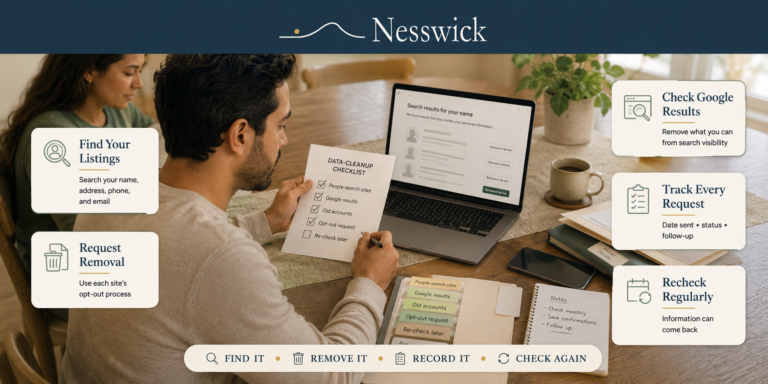


Related Resources

Affiliate Disclosure
Current relationship: Nesswick does not currently use affiliate links in this article. Product and service references are included for editorial purposes.
Sources and Methodology
This review was prepared without purchasing, operating or testing an Optery account. Every tier name, price, coverage figure and feature description was read directly from Optery’s own current pricing and product pages on the review date below, and comparison figures for DeleteMe and Incogni were read from their official pricing pages on the same day. Where a coverage number is the provider’s own claim rather than a measured result, it is attributed to the provider in the text. Pricing, tier structure, promotional discounts and broker coverage all change, and promotional pricing is not renewal pricing, so confirm current figures on the provider’s own site before subscribing. We name no universal winner, make no claim about removal effectiveness or permanence, and have kept official provider information and Nesswick’s editorial judgment clearly separated throughout.
Last reviewed and verified: September 17, 2026.